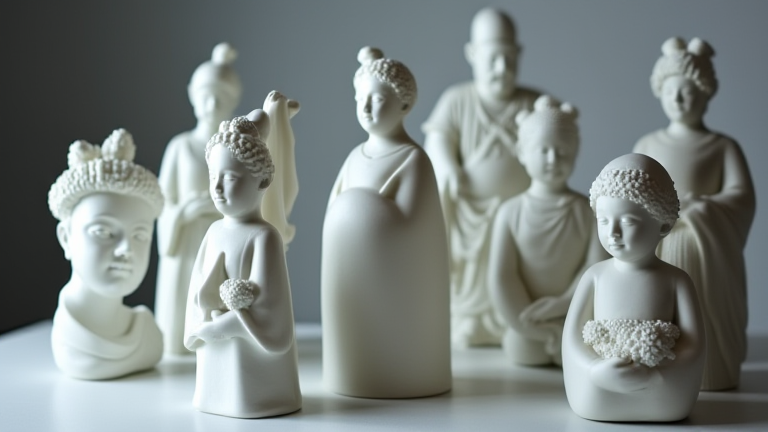
Digital Preservation: Tech Innovations for Porcelain Sculptures
TL;DR: Advanced photogrammetry and AI-driven spectral imaging now allow museums to create millimeter-accurate digital twins of fragile porcelain figurines. These high-fidelity records ensure long-term preservation by enabling virtual restoration and non-invasive analysis without physical risk.
The preservation of delicate porcelain sculptures, ranging from historical Meissen figurines to contemporary artistic installations, faces significant challenges due to the material’s susceptibility to micro-fractures and environmental degradation. Traditional conservation methods often require physical handling, which poses inherent risks to these fragile objects. Consequently, the industry is rapidly adopting non-contact digital technologies that capture intricate surface details and structural integrity with unprecedented precision. This shift marks a new era in cultural heritage management, prioritizing data-rich documentation over invasive inspection.
If you want to dig deeper, check out our guide on Health Benefits of Collecting Porcelain Figurines.
Latest Developments in Scanning Technology
Recent advancements in structured light scanning and laser interferometry have revolutionized how conservators approach porcelain artifacts. Modern scanners now achieve sub-millimeter accuracy, capable of detecting hairline cracks invisible to the naked eye. For instance, new systems utilize multi-spectral imaging to analyze glaze composition and identify previous repairs. This technology creates comprehensive digital twins that include not just geometry but also material properties. By capturing over 100 million data points per scan, these systems provide a baseline for monitoring subtle changes over time, such as glaze crazing or discoloration caused by humidity fluctuations.
Technical Specifications and Industry Impact
The latest hardware specifications emphasize portability and resolution. Leading devices now offer a maximum scan volume of 2 meters with a point spacing of less than 0.1 millimeters. Processing speeds have improved dramatically, allowing for real-time previewing of scanned models, which reduces setup time for museum staff. The industry impact is profound; major institutions are integrating these tools into their preventive conservation strategies. Digital archives of porcelain figurines now serve as primary resources for researchers worldwide, reducing the need for physical loans. Furthermore, AI algorithms can simulate the effects of different environmental conditions on porcelain, helping curators optimize display cases. This proactive approach minimizes intervention costs and extends the lifespan of valuable collections. The integration of blockchain technology for authenticating digital records further enhances trust in provenance data, ensuring that digital twins remain legally and historically verifiable assets.
FAQ
Q: How accurate are current digital scans for porcelain figurines?
A: Modern structured light scanners achieve sub-millimeter accuracy, often capturing details as small as 0.1 millimeters, which is sufficient to detect micro-fractures and surface imperfections invisible to the human eye.
Q: Can digital preservation replace physical conservation of porcelain sculptures?
A: No, digital preservation complements physical conservation. It provides a vital record for monitoring condition and planning interventions, but it cannot repair physical damage or protect the original object from environmental degradation.
Q: What are the main advantages of using AI in porcelain analysis?
A: AI accelerates the detection of anomalies such as glaze crazing or previous repairs by comparing current scans against historical data, allowing conservators to identify early signs of degradation before they become critical issues.
Leave a Reply