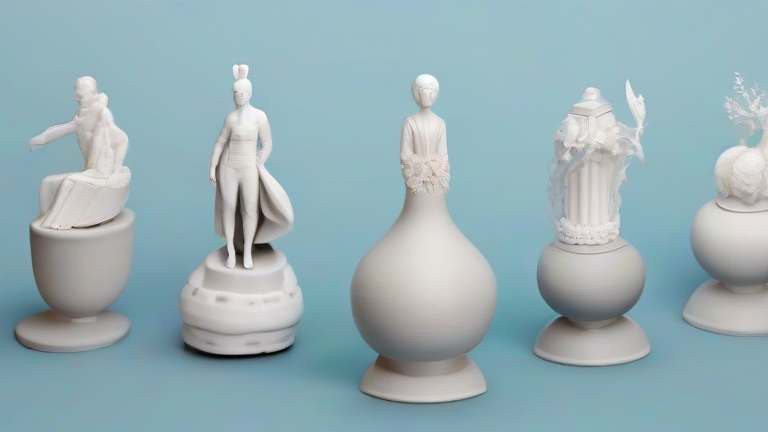
TL;DR: 3D-printed porcelain figurines are transforming the sculpture industry by enabling complex, high-detail designs that were previously impossible to achieve through traditional hand-thrown or hand-modeled methods. This technology offers unparalleled precision and material efficiency, allowing for mass production of unique artistic pieces while maintaining the aesthetic and tactile qualities of traditional ceramics.
The Convergence of Digital Artistry and Ancient Craft
For centuries, porcelain has been the medium of choice for fine figurines, celebrated for its translucency, strength, and elegant white finish. However, the traditional process is labor-intensive, requiring skilled artisans to model each piece by hand, a method that limits scalability and often results in subtle variations between individual items. The introduction of 3D printing technology, specifically designed for ceramic slurries, has revolutionized this landscape. By utilizing digital files, artists can now create intricate geometries, hollow structures, and fine surface textures with microscopic accuracy, bridging the gap between digital design and physical object without sacrificing the material’s inherent beauty.
If you want to dig deeper, check out our guide on Invest in Porcelain Figurines: Top Business Strategies.
Technical Specifications and Material Innovations
The latest developments in 3D-printed porcelain focus on optimizing the ceramic slurry formulation to ensure high flowability and stability. Recent advancements have introduced nano-silica additives that enhance green strength, allowing printed figurines to be handled immediately after printing without deformation. The particle size of the porcelain powder has been refined to under 50 microns, which significantly reduces the risk of cracking during the drying and firing stages. Modern industrial printers now achieve layer resolutions of 100 microns or less, enabling the reproduction of minute details such as hair strands, fabric folds, and facial features with a fidelity that rivals or exceeds hand-carved works. Furthermore, new curing technologies utilize UV light or heated beds to accelerate the initial drying process, reducing production times from several days to a matter of hours.
Industry Impact and Market Shifts
The impact of this technology on the figurine industry is profound. Manufacturers are seeing a reduction in material waste by up to 30%, as additive manufacturing uses only the necessary amount of porcelain. This efficiency translates to lower production costs, making high-end porcelain sculptures more accessible to a broader consumer base. The industry is shifting from mass production of identical items to on-demand, personalized manufacturing. Customers can now commission custom figurines based on digital scans of their pets, family members, or original artistic concepts. This personalization trend is driving new revenue streams for studios and galleries, who can offer bespoke pieces that were previously too expensive or time-consuming to produce. Additionally, the ability to prototype quickly allows designers to test new forms and shapes, accelerating the innovation cycle in ceramic art. The sustainability angle is also gaining traction, as the precision of 3D printing minimizes off-cuts and broken prototypes compared to traditional casting methods.
As the technology matures, we can expect further integration with artificial intelligence to suggest optimal structural supports and firing schedules. The fusion of digital precision and the timeless appeal of porcelain ensures that 3D printing will not replace the artisan but rather empower them to push the boundaries of what is physically possible in ceramic sculpture. The future of figurines is not just about printing objects; it is about sculpting a new era of creative freedom and technical excellence.
FAQ
Q: Is 3D-printed porcelain as durable as traditionally made figurines?
A: Yes, when properly formulated and fired, 3D-printed porcelain achieves similar vitrification levels to traditional methods, resulting in comparable hardness and water resistance.
Q: Can 3D printing reproduce hand-carved textures accurately?
A: Yes, modern high-resolution printers can replicate intricate surface textures and details that mimic hand-carving, often with greater consistency across multiple units.
Q: What is the average cost difference between 3D-printed and hand-made porcelain figurines?
A: For complex designs, 3D-printed figurines are often 20-40% less expensive due to reduced labor and material waste, though pricing varies based on size and customization.
Leave a Reply