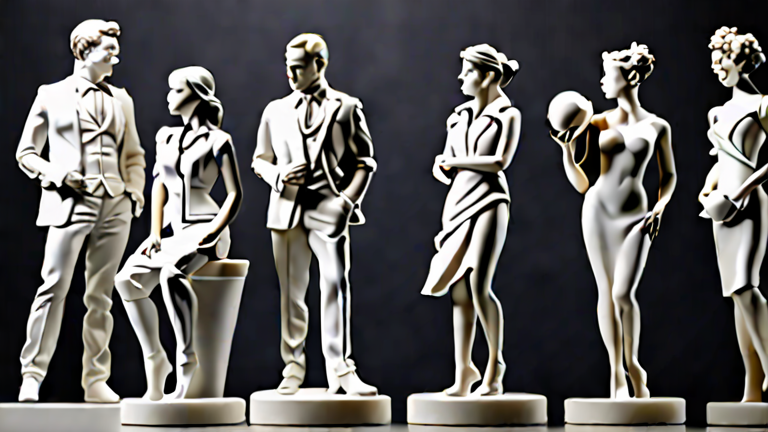
Tech Trends in 3D Printing Porcelain Figurines & Sculptures
TL;DR: Advances in high-resolution digital light processing (DLP) and material science have enabled the precise 3D printing of intricate porcelain figurines and sculptures with unprecedented detail. This shift allows artists and manufacturers to produce complex ceramic art with reduced waste and faster turnaround times, transforming the traditional pottery industry.
The intersection of additive manufacturing and traditional ceramics is experiencing a significant renaissance. For centuries, creating intricate porcelain figurines and sculptures required skilled hands, molds, and extensive manual finishing. Today, 3D printing technology is democratizing this process, allowing for designs that were previously impossible to fabricate by hand. The latest developments focus not just on the hardware, but on the sophisticated digital-to-physical workflows that bridge the gap between digital design and kiln-fired reality.
If you want to dig deeper, check out our guide on **Porcelain Figurines & Health: 5 Surprising Wellness Benefi.
Latest Technological Developments
The core of this revolution lies in the evolution of printing methods suitable for viscous ceramic slurries. While FDM (Fused Deposition Modeling) has long struggled with the fine details required for porcelain figurines, DLP and SLA technologies have emerged as the industry leaders. These light-based methods can achieve layer heights as thin as 0.05mm, capturing the delicate textures of porcelain sculptures, such as the fine lines in a character’s hair or the subtle curves of a decorative vase. Furthermore, the development of “green” ceramic pastes, which are specifically formulated for 3D printing, has improved flowability and reduced shrinkage rates. These specialized inks contain precise ratios of kaolin, feldspar, and quartz, ensuring that the printed figurine retains its structural integrity during the drying and bisque firing stages.
Another critical advancement is the integration of AI-driven post-processing software. As porcelain is prone to cracking during the drying process, predictive algorithms now help optimize support structures and drying schedules. This technology predicts stress points in complex sculptures, adjusting the print orientation to minimize deformation. For artists creating large-scale porcelain installations, this means fewer failed prints and higher success rates, significantly reducing the material costs associated with high-quality porcelain clay.
Technical Specifications and Performance
Modern 3D printers designed for ceramics feature build volumes that accommodate everything from small desktop figurines to life-sized sculptures. Typical specifications for high-end ceramic printers include a build volume of 200mm x 200mm x 300mm, allowing for sufficient size for detailed figurines. The resolution is the key metric, with top-tier machines offering XY resolutions of 10 microns or less. This level of precision is essential for porcelain, where surface smoothness is a primary aesthetic factor. Additionally, these printers utilize vacuum systems to ensure consistent viscosity of the ceramic paste, preventing clogging in the fine nozzles or vat systems. The resulting “green” bodies must be carefully dehydrated before firing, a process that has been streamlined by automated kiln controllers that integrate directly with the printing software, creating a seamless pipeline from digital file to finished, glazed porcelain artwork.
Industry Impact and Future Outlook
The impact on the art and manufacturing sectors is profound. Galleries and museums are increasingly commissioning 3D-printed porcelain pieces for their ability to replicate historical artifacts with archival accuracy or to create new, avant-garde forms. For commercial manufacturers, the ability to run small-batch production lines for unique porcelain figurines reduces inventory risks. Artists can now prototype and sell custom sculptures without the overhead of traditional mold-making. As materials science continues to refine ceramic inks, we expect to see even higher firing temperatures and greater color versatility, eventually allowing for multi-material porcelain prints that combine different clay bodies in a single sculpture. The future of porcelain is digital, precise, and increasingly accessible to creators worldwide.
FAQ
Q: What is the best 3D printing technology for porcelain figurines?
A: Digital Light Processing (DLP) is currently the best technology for porcelain figurines due to its ability to achieve extremely high resolutions and smooth surface finishes, which are critical for detailed ceramic art.
Leave a Reply