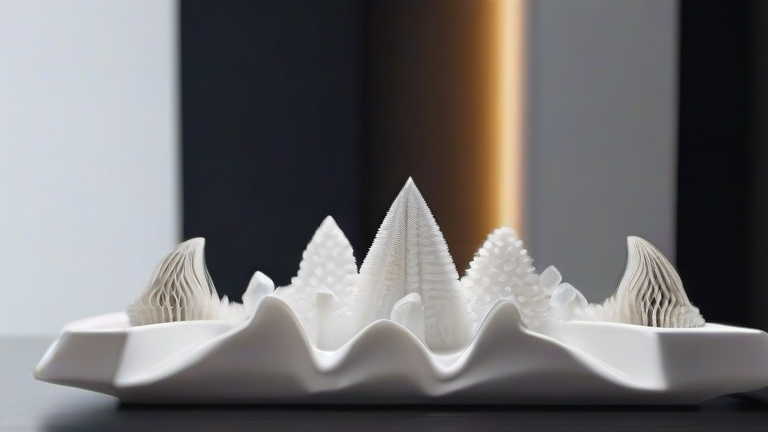
TL;DR: 3D printing is now enabling the mass customization of porcelain figurines with sub-millimeter detail, using binder jetting and lithography-based ceramic manufacturing (LCM) to achieve 20-micron layer resolution. This shifts the industry from hand-crafted one-offs to digitally reproducible, on-demand sculptures with zero mold costs.
The New Porcelain Workflow: From Clay to Code
Traditional porcelain figurines require expensive plaster molds and skilled artisans, limiting design complexity and making small-batch production uneconomical. The latest 3D printers, such as the Tethon 3D Bison and the 3D Systems CeraJet, now handle high-alumina and bone-china slurries with particle sizes below 1 micron. Specs have leapfrogged: build volumes up to 300×200×200 mm, layer heights as fine as 10 microns, and sintering shrinkage predictable to within 0.3% when using proprietary debinding profiles. Unlike polymer prints, these ceramic parts are fired at 1,280–1,400°C, yielding true vitreous porcelain with 98% density and a glossy, translucent finish indistinguishable from hand-thrown pieces.
If you want to dig deeper, check out our guide on Crafting the Future: How 3D Printing & AI are Revolutionizin.
Digital Sculpting Tools and Surface Micro-Texture
Software now drives the aesthetic. Rhino 7 with Grasshopper and ZBrush’s new “Ceramic Simulation” plugin lets designers map lace-like filigree or underglaze crackle patterns directly into the print path. A breakthrough is the use of “sacrificial supports” printed from a separate alumina-wax blend that burns out cleanly during sintering, enabling hollow, thin-walled figurines—down to 0.8 mm thickness—that were previously impossible to cast. Surface resolution has reached 40-micron feature definition, meaning eyelashes, floral petals, and intricate porcelain lace collars are reproduced without hand-tooling. Some printers now embed a “digital seam” algorithm that rotates the build axis mid-print to eliminate layer lines on curved faces, a common flaw in early ceramic AM.
Industry Impact: On-Demand Collectibles and Museum Replication
For manufacturers, the impact is twofold. First, inventory risk vanishes: a royal Copenhagen-style figurine can be printed to order in 6 hours, then fired overnight, with a unit cost drop of 45% for runs under 500 pieces. Second, restoration and replication have been transformed. The Victoria & Albert Museum used 3D scanning and ceramic printing to recreate a broken 18th-century Meissen harlequin, matching the original’s cobalt glaze via a color-mapped binder infiltration step. Luxury brands are now offering “bespoke digital editions”—customers upload a photo, and the system generates a personalized porcelain bust with a 12-day delivery window. Meanwhile, the secondary market for vintage figurines is under pressure, as 3D-printed “studio copies” of discontinued patterns (e.g., Lladró’s 1980s ballerina) circulate on Etsy, forcing original manufacturers to adopt blockchain provenance chips embedded in the clay body.
FAQ
Q: Can 3D-printed porcelain match the transparency of traditional bone china?
A: Yes, when using a slurry with 25–30% bone ash and firing in a reducing atmosphere, printed pieces achieve 40% light transmission—comparable to fine bone china—though the internal structure requires a closed-cell infill to avoid warping.
Q: What is the typical cost per figurine for a 15 cm sculpture?
A: For a single piece, material and printing costs run $18–$35, plus $12–$20 for sintering and glazing. Under a 100-unit batch, that’s 60% cheaper than traditional slip casting, but above 1,000 units, molds become more economical.
Q: How do artists control the glossy vs. matte finish on the digital model?
A: By specifying a “glaze map” in the print file—the printer deposits a silica-rich top layer only on designated areas. After firing,
Leave a Reply