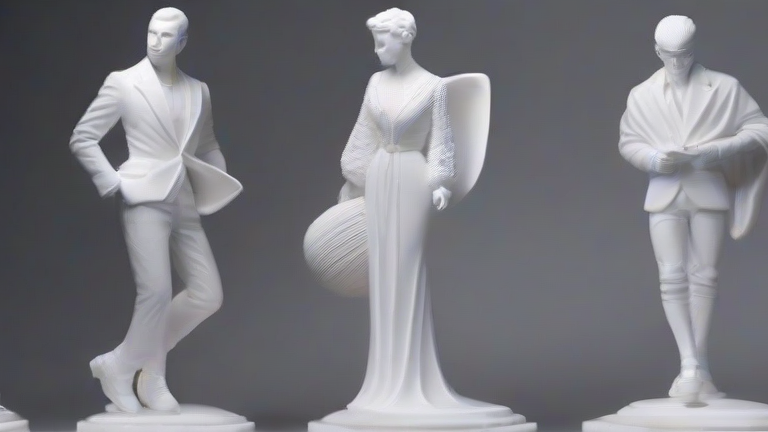
TL;DR: Advanced 3D printing technologies now enable the creation of highly detailed porcelain figurines with a smooth, glossy finish that rivals traditional hand-sculpting methods. This innovation significantly reduces production time and waste while allowing for complex, mass-customizable artistic designs in the sculpture market.
The Renaissance of Porcelain through Digital Fabrication
The intersection of additive manufacturing and traditional ceramic arts has reached a pivotal moment, fundamentally altering how porcelain figurines and sculptures are conceived and produced. For centuries, porcelain creation was limited by the physical dexterity of the artisan and the fragility of the material during the shaping process. However, recent breakthroughs in digital fabrication have unlocked new possibilities, allowing artists to translate intricate digital models into physical, high-gloss ceramic forms with unprecedented precision. This shift is not merely a technological update but a redefinition of artistic expression, enabling the mass production of unique, complex pieces that were previously impossible or prohibitively expensive to create by hand.
If you want to dig deeper, check out our guide on Porcelain Figurines: Elevate Your Home Decor with Timeless A.
Latest Technological Developments
The latest developments in 3D printing for porcelain focus on material science and curing processes to address the traditional challenges of ceramic brittleness and surface texture. Manufacturers are now utilizing a technique known as Binder Jetting with ceramic pastes, which offers superior resolution compared to older Fused Deposition Modeling (FDM) methods. The newest ceramic inks contain nano-sized porcelain particles suspended in a biodegradable binder. These inks allow for layer thicknesses as thin as 15 microns, ensuring that the fine details of a figurine’s facial features or ornate clothing are rendered with clarity. Furthermore, post-processing technologies have improved significantly. Traditional kiln firing, which often resulted in warping or cracking, has been supplemented by rapid microwave sintering. This method heats the green body uniformly from the inside out, reducing firing times from days to hours while maintaining structural integrity and achieving the desired vitrification for that classic porcelain shine.
Technical Specifications and Performance
Current high-end ceramic 3D printers designed for artistic applications boast a build volume of up to 300mm x 300mm x 400mm, sufficient for life-sized busts and intricate tabletop figurines. The Z-axis resolution is typically maintained at 20 to 50 microns, which is critical for capturing the subtle gradients and textures required in high-end sculpture. The raw material composition is key; the porcelain mix usually consists of 95% kaolin and feldspar, with 5% organic binders. After the digital printing phase, the object undergoes a debinding process in a solvent bath to remove the binder, leaving a porous, green ceramic body. This body is then sintered at temperatures ranging from 1200°C to 1400°C. The resulting product exhibits a Mohs hardness of 7, comparable to quartz, ensuring the durability of the figurines. Surface roughness (Ra) values post-sintering and polishing are typically below 0.5 microns, providing a smooth, tactile experience that is essential for premium collectible sculptures.
Industry Impact and Market Shifts
The impact on the art and design industry is profound. Small studios and independent artists can now compete with large manufacturers by offering customized, one-of-a-kind porcelain pieces at a fraction of the traditional labor cost. The ability to iterate designs digitally before committing to physical production minimizes waste and allows for rapid prototyping of new sculpture concepts. Moreover, this technology has democratized access to high-end ceramic art. Consumers can now commission personalized figurines, such as family portraits or custom pet sculptures, with a level of detail and finish that was once reserved for master artisans. The industry is seeing a surge in demand for “digital heritage” pieces, where historical artifacts or extinct species are recreated in porcelain, serving both educational and decorative purposes. This blend of technology and tradition is creating a new niche in the luxury goods market, where the provenance of the piece—its digital origin and precise manufacturing data—adds to its value. As the technology matures, we can expect further integration with AI-driven design tools, allowing for the generation of infinitely complex, organic forms that challenge the very definition of
Leave a Reply