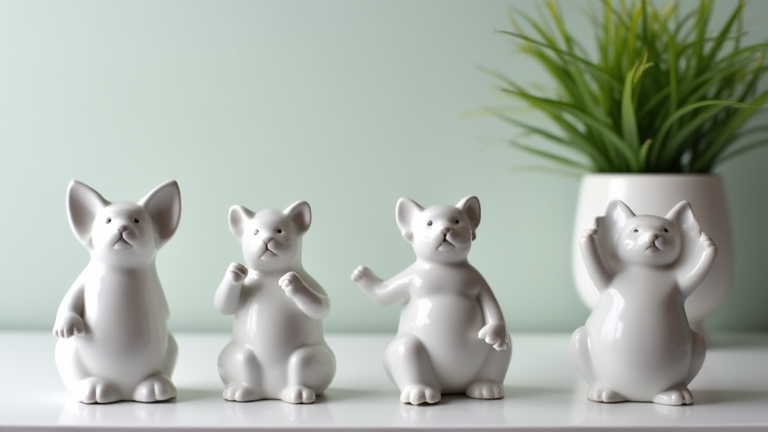
Porcelain Figurines: Do They Affect Home Air Quality?
TL;DR: High-quality glazed porcelain figurines are chemically inert and do not release volatile organic compounds or toxins into the air. However, dust accumulation on their surfaces can degrade indoor air quality if not regularly cleaned with appropriate methods.
The Material Science of Porcelain
Porcelain is a ceramic material made by heating a specific combination of raw materials, including kaolin, feldspar, and quartz, to very high temperatures. This process creates a dense, non-porous structure that is distinct from softer, porous ceramics. From a health and wellness perspective, the key factor is the glaze. Modern porcelain figurines are typically finished with a lead-free, food-safe glaze that seals the surface completely. This sealant prevents any internal materials from migrating into the room. Consequently, unlike some low-quality plastics or painted wooden items that may off-gas formaldehyde or other VOCs, properly manufactured porcelain sculptures are generally considered safe for indoor environments, including bedrooms and nurseries.
If you want to dig deeper, check out our guide on Handcrafted Porcelain Figurines: A Guide to Collectible Art .
The Real Risk: Dust and Particulates
While the material itself is safe, the physical nature of intricate figurines presents a different challenge. Sculptures with complex details, nooks, and crannies act as magnetic traps for airborne particulate matter. Over time, dust, pet dander, and pollen settle on these surfaces. If left unattended, this accumulated dust can be disturbed by air currents, such as those from heating vents or walking by, reintroducing allergens into the breathing zone. For individuals with asthma, allergies, or respiratory sensitivities, this particulate load can trigger symptoms. Therefore, the impact on air quality is not chemical but mechanical, driven by the retention of common household allergens.
Lifestyle Tips for Healthy Decor
To maintain optimal air quality while enjoying your porcelain collection, adopt a proactive cleaning routine. Use a microfiber cloth, which effectively traps dust without scattering it, rather than dry paper towels that merely push particles around. For intricate pieces, a soft-bristled brush or a can of compressed air can dislodge trapped particles from deep crevices. Avoid using harsh chemical cleaners or sprays, as these can leave residues that may volatilize over time. Instead, a damp cloth with mild soapy water is sufficient for most glazed surfaces. Additionally, consider placing figurines in areas with good air circulation but away from direct HVAC vents to minimize constant dust disturbance. Regularly changing HVAC filters further complements your cleaning efforts by capturing airborne particles before they settle on your decor.
FAQ
Q: Do antique porcelain figurines contain lead that affects air quality?
A: While some very old glazes may contain lead, the lead is locked within the glaze and does not vaporize into the air under normal conditions, posing minimal airborne risk if the glaze is intact.
Q: Should I keep porcelain sculptures in the bedroom?
A: Yes, provided you dust them regularly, as porcelain itself does not emit gases that interfere with sleep quality or respiratory health.
Q: How often should I clean my porcelain collection to protect air quality?
A> It is recommended to dust porcelain figurines at least once a week to prevent the buildup of allergens and particulate matter that can circulate in the air.
Leave a Reply