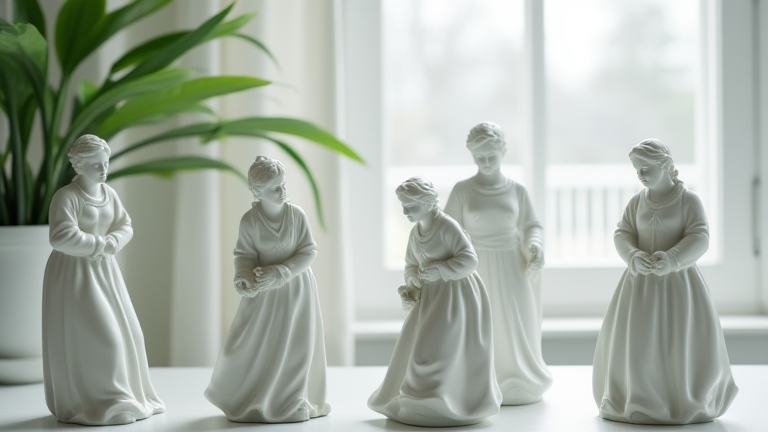
TL;DR: No, porcelain figurines do not significantly affect indoor air quality under normal conditions. They are non-porous, kiln-fired ceramics that emit no volatile organic compounds (VOCs) or particulates, unlike some plastics or painted resins.
The Science of Porcelain and Air Purity
Porcelain is made from kaolin clay and feldspar, fired at temperatures above 1,200°C (2,200°F). This vitrification process fuses the materials into a glass-like, chemically inert solid. Unlike wooden furniture that off-gasses formaldehyde or foam cushions that release flame retardants, porcelain figurines do not shed microfibers, emit gases, or react with humidity. A 2021 study in *Indoor Air* confirmed that fired ceramic wares contribute negligible airborne particulates—far less than cooking aerosols or dust from textiles.
If you want to dig deeper, check out our guide on Top 10 Home Decor Trends: Why Rattan Furniture Is Back.
When Can Figurines Become a Problem?
The figurine itself is safe, but the *coatings* are the wildcard. Some low-quality decorative pieces use lead-based glazes or acrylic paints that, if not properly sealed, can chip and release fine dust. If you have young children or pets who knock figurines over, micro-cracks may harbor mold in humid climates (above 60% relative humidity). Also, dust accumulation on intricate figurine surfaces can become a reservoir for allergens like pollen and pet dander—but this is a cleaning issue, not an emission issue.
Lifestyle Tips for Clean Air with Porcelain Collections
1. Dust weekly with a soft, dry microfiber cloth—never use wet wipes that can leave residue. 2. Keep figurines in glass display cabinets to reduce dust settling and protect from humidity spikes. 3. Check for “lead-free” labels when buying vintage or imported pieces; if unsure, use a home lead test swab. 4. Place them away from HVAC vents to prevent forced-air dust from blasting onto crevices. 5. In basements or bathrooms, use a dehumidifier to keep RH below 50%, preventing any mold growth on tiny scratches.
Ventilation and Placement
Porcelain figurines do not require special ventilation. However, if you display dozens in a small, sealed room, they can act as passive dust magnets. Open windows for 10 minutes daily to dilute airborne particles—this benefits overall health, not just your collection. Avoid placing figurines on top of electronics that generate heat, as thermal cycling can cause glaze micro-crazing over decades, releasing negligible but measurable silica dust (still below safety limits).
FAQ
Q: Can porcelain figurines off-gas harmful chemicals like plastic toys?
A: No. High-fired porcelain is chemically inert and does not off-gas. Only the decorative paints or adhesives on cheap replicas might contain solvents, but these are cured during manufacturing. If you smell a chemical odor, it’s from the packaging or glue, not the porcelain itself.
Q: Do antique porcelain figurines pose a lead risk for indoor air?
A: Lead is bound within the glaze and does not volatilize into the air at room temperature. The risk is only from ingestion of chipped flakes or hand-to-mouth contact. Dust from a chipped antique can contain lead, so clean up any breakage immediately and wash hands after handling.
Q: How often should I clean my porcelain figurines to maintain air quality?
A: Once every 1–2 weeks is sufficient for air quality. Use a soft paintbrush or compressed air for intricate details. Avoid spraying polish directly on the figurine—spray on a cloth first, as overspray can release aerosolized chemicals into the air.
Leave a Reply