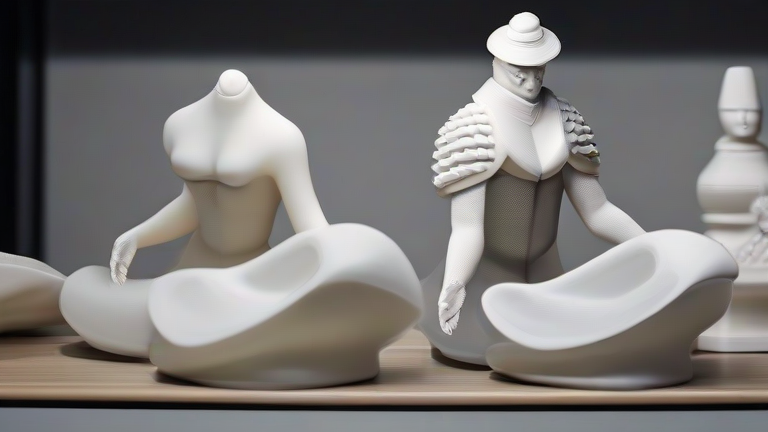
Digital Preservation: Scanning & 3D Printing Porcelain Figures
TL;DR: High-precision structured light scanners now capture micron-level details of delicate porcelain figurines, creating robust digital twins for permanent archival. Advanced 3D printing technologies using photopolymer resins allow for high-fidelity reproduction, ensuring that fragile historical sculptures can be preserved, studied, and shared without risking physical damage to the originals.
The Evolution of Digital Archiving
The preservation of artistic heritage has always been a battle against time, material fatigue, and accidental damage. Porcelain figurines and sculptures, renowned for their exquisite translucency and fine surface detailing, are particularly vulnerable. Traditional archiving methods, such as photography and manual measurement, often fail to capture the complex curvature and subtle glaze variations inherent in these pieces. However, the latest developments in photogrammetry and laser scanning have revolutionized this field. Modern systems can now generate point clouds with resolutions exceeding 50 microns, allowing conservators to document every chip, crack, and brushstroke with unprecedented accuracy. This digital layer serves as an immutable record, ensuring that even if the physical artifact is lost, its digital ghost remains intact for future generations.
If you want to dig deeper, check out our guide on Porcelain Figurines: Health Benefits & Safe Display Tips.
Technical Specifications and Workflow
The process begins with non-contact 3D scanning. For delicate porcelain, structured light scanners are preferred over laser systems to avoid potential thermal stress. These devices project patterns of light onto the figurine, capturing depth information through triangulation. The resulting data is processed into a watertight mesh, typically saved in STL or OBJ formats. To ensure color fidelity, which is critical for glazed ceramics, high-resolution texture mapping is applied. The mesh is then prepared for 3D printing. While porcelain can be 3D printed using ceramic powder bed fusion, this is costly and slow for single items. Therefore, the industry increasingly relies on high-resolution stereolithography (SLA) or digital light processing (DLP) using clear or white photopolymer resins. These resins can achieve layer heights as low as 25 microns, perfectly replicating the smooth, glossy finish of original porcelain glazes. Post-processing involves careful sanding and curing to remove support structures and harden the print, followed by hand-painting to match the original pigments.
Industry Impact and Future Prospects
The integration of scanning and 3D printing into the porcelain preservation sector has profound implications for museums, galleries, and collectors. It enables the creation of touchable replicas for educational purposes, allowing visitors to interact with the form of famous sculptures without handling the fragile originals. This democratizes access to art, making high-value pieces available in classrooms and digital galleries worldwide. Furthermore, this technology aids in restoration. By comparing a scanned current state with a historical digital model, conservators can precisely identify missing fragments and fabricate exact replacements. The cost of digital archiving has dropped significantly, making it feasible for smaller institutions to preserve their collections. As resolution capabilities continue to improve, we can expect even more nuanced captures of surface textures, such as the subtle crazing in old glazes. Ultimately, this synergy between digital technology and traditional craftsmanship ensures that the beauty of porcelain figurines will endure, transcending the physical limitations of the material itself.
FAQ
Q: Can 3D printed porcelain figures be mistaken for the originals?
A: While high-resolution resin prints can be visually indistinguishable from a distance, experts can identify them through material analysis, weight differences, and the absence of traditional kiln firing marks, ensuring they serve as replicas rather than forgeries.
Q: What is the resolution limit for scanning delicate porcelain sculptures?
A: Current state-of-the-art structured light scanners achieve resolutions between 10 and 50 microns, which is sufficient to capture fine details like hair strands, facial features, and surface glaze imperfections on small figurines.
Q: Is it legal to 3D print and sell copies of museum porcelain?
A: Legality depends on the specific copyright and moral rights laws of the jurisdiction, as well as the museum
Leave a Reply