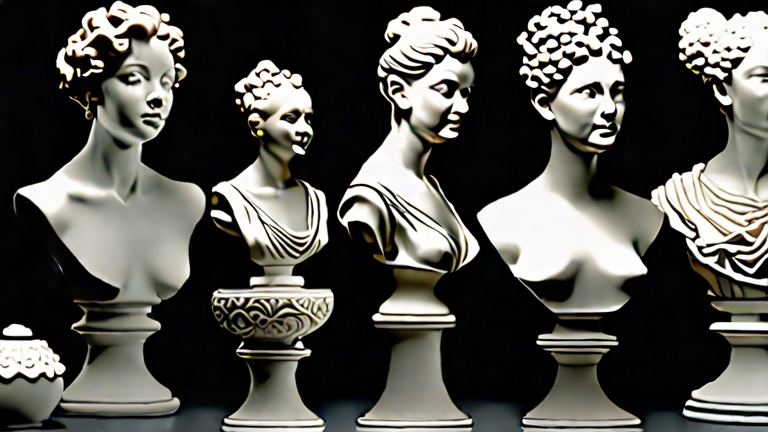
Digital Art: 3D Scanning & Printing for Porcelain Sculptures
TL;DR: Advanced structured-light scanners and high-precision 3D printing have revolutionized the creation of porcelain sculptures by enabling complex, organic forms that are impossible to achieve through traditional hand-thrown or hand-modeled techniques. This digital workflow allows artists to iterate designs rapidly, achieve microscopic surface detail, and mass-produce unique artistic pieces with industrial-grade consistency.
The Shift to Digital Precision
The porcelain industry is undergoing a significant transformation, driven by the integration of high-fidelity 3D scanning and additive manufacturing technologies. Historically, creating intricate porcelain figurines required months of skilled labor, involving careful wheel-throwing, hand-carving, and meticulous glazing. While the tactile nature of clay remains central to the medium, digital tools are now enhancing rather than replacing these traditional methods. The latest developments in this space focus on capturing the subtle nuances of organic shapes—such as the delicate petals of a ceramic flower or the intricate folds of a sculpted robe—with unprecedented accuracy.
If you want to dig deeper, check out our guide on How to Make Porcelain Figurines: A Step-by-Step Sculpting Tu.
Latest Technical Developments
Recent advancements in structured-light scanning technology have reduced the margin of error to under 0.1 millimeters, a critical specification for porcelain work where thin walls can easily crack during the kiln firing process. New generation scanners utilize multiple projectors to capture complex, hollow interiors and undercuts that were previously difficult to digitize without destructive sampling. Simultaneously, 3D printing technologies specifically calibrated for ceramic slurries have improved. High-end printers now offer layer resolutions as fine as 25 microns, allowing for the reproduction of fine textures, such as the grain of wood or the texture of skin, directly into the printed greenware.
Software integration has also matured, with plugins that automatically optimize the orientation of the sculpture for printing to minimize support structures. This is vital for porcelain, as removing supports can damage fragile, unfired pieces. Furthermore, new algorithms assist in “shell thinning,” ensuring that the digital model has uniform wall thickness. This feature prevents uneven shrinkage during the bisque and glaze firings, which is a common cause of failure in traditional porcelain manufacturing.
Industry Impact and Production
The impact on the industry is profound, shifting production from purely artisanal to a hybrid model that combines digital precision with artistic hand-finishing. Studios can now create one-of-a-kind masterpieces in days rather than months, while also enabling small-batch production of identical pieces for commercial sale without sacrificing the aesthetic of handmade art. This scalability has opened new markets for porcelain designers, allowing them to offer customizable figurines and sculptures to a broader audience.
Moreover, the technology has democratized access to complex forms. Artists who may not have the decades of training required to hand-sculpt hyper-realistic figures can now focus on the conceptual and finishing aspects of their work, relying on digital fabrication for the structural integrity of the piece. The result is a new genre of porcelain art that blends the warmth and translucency of traditional ceramic materials with the limitless design possibilities of the digital realm. As hardware costs decrease and software becomes more user-friendly, this technology is expected to become a standard tool in the ceramic artist’s studio, fundamentally changing how porcelain sculptures are conceived, created, and collected.
FAQ
Q: Can 3D printed porcelain be glazed just like hand-made pieces?
A: Yes, once the 3D printed ceramic is fired, it behaves identically to traditional porcelain, accepting glazes and finishing techniques in the same way.
Q: What is the main advantage of scanning over modeling for sculptures?
A: Scanning allows for the accurate replication of existing physical forms and enables rapid iteration of complex organic shapes that are difficult to model manually.
Q: Are there limitations to 3D printing large porcelain sculptures?
A: While possible, very large pieces require specialized printers and careful support design to prevent warping or breakage during the drying and firing stages.
Leave a Reply