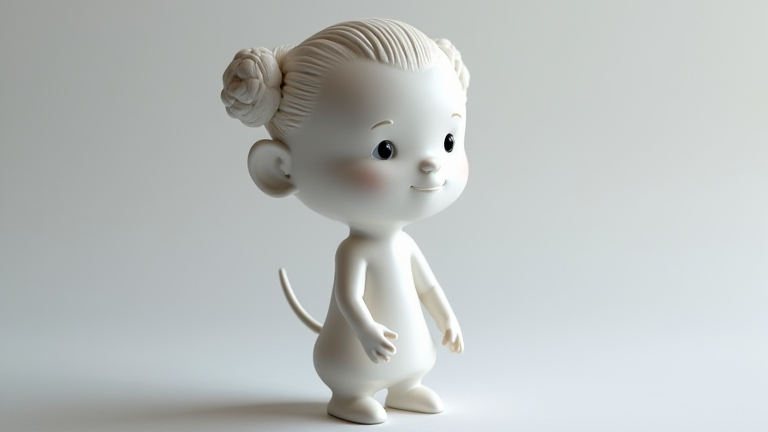
3D Printing Porcelain: Tech Reshaping Figurine Art + Sculpture
TL;DR: Advanced 3D printing technologies now enable the precise fabrication of complex porcelain figurines and sculptures, bridging the gap between digital design and traditional ceramic art. This innovation drastically reduces production costs and waste, allowing artists to create intricate, mass-producible ceramic works with unprecedented detail and consistency.
The Revolution in Ceramic Fabrication
The intersection of additive manufacturing and ceramic arts has reached a pivotal milestone. For centuries, porcelain creation relied on skilled artisans using molds, wheel-throwing, and hand-carving. Today, high-resolution 3D printing is reshaping this landscape, particularly for figurines and fine sculptures. The latest developments focus on Direct Ink Write (DIW) and Stereolithography (SLA) techniques adapted specifically for ceramic slurries. These methods allow for the deposition of fine porcelain pastes layer by layer, curing them with heat or light to achieve structural integrity. This shift is not merely about automation; it is about unlocking design freedoms that were previously impossible in traditional casting, such as internal lattices, ultra-thin walls, and organic, non-repetitive geometric patterns that define modern figurine aesthetics.
If you want to dig deeper, check out our guide on Porcelain Figurines: Top Trends & Care Tips for Collectors.
Technical Specifications and Material Science
Modern industrial-grade porcelain printers utilize proprietary ceramic inks composed of ultra-fine kaolin, feldspar, and quartz particles suspended in a biodegradable binder. The particle size is critical, typically ranging from 10 to 20 microns, ensuring a smooth surface finish that requires minimal post-processing. Resolution is a key metric, with current leading systems achieving layer heights as low as 50 microns. This precision allows for the reproduction of minute details in figurines, such as facial expressions, intricate clothing textures, and delicate floral elements. Furthermore, the curing process involves high-temperature sintering, often reaching temperatures between 1,200°C and 1,400°C. This step removes the organic binder and fuses the ceramic particles into a dense, vitreous structure. The resulting artifacts exhibit high compressive strength and low water absorption, meeting the standards for museum-quality sculptures while retaining the delicate translucency characteristic of fine porcelain.
Industry Impact and Market Dynamics
The impact on the industry is profound. For artists and designers, 3D printing eliminates the need for expensive, custom-molded tooling, significantly lowering the barrier to entry for small-batch production. This democratization allows independent studios to compete with large manufacturers. In the luxury market, the technology enables the creation of limited-edition figurines that are both highly detailed and consistent, enhancing their collectible value. Additionally, the reduction in material waste is a major environmental benefit. Traditional casting often results in significant offcuts and scrap material, whereas additive manufacturing uses only the material necessary for the final form. This efficiency, combined with the ability to iterate designs rapidly through digital prototyping, accelerates the time-to-market for new sculpture lines. As the technology matures, we expect to see a surge in hybrid works, where 3D-printed porcelain bases are combined with hand-painted details or other materials, creating new artistic categories that blend digital precision with human craftsmanship.
FAQ
Q: Can 3D-printed porcelain figurines withstand high temperatures?
A: Yes, once sintered, the porcelain becomes vitrified and is highly heat-resistant, capable of withstanding temperatures well above 1,000°C without degrading.
Q: What is the primary limitation of current 3D printing for large-scale porcelain sculptures?
A: The main challenge is the size of the build volume; creating very large, single-piece sculptures often requires printing in sections and joining them, which can leave visible seams.
Q: How does the surface finish of 3D-printed porcelain compare to traditional casting?
A: With high-resolution printers, the surface finish is comparable to or better than traditional casting, often requiring only light sanding and glazing to achieve a museum-quality smoothness.</
Leave a Reply