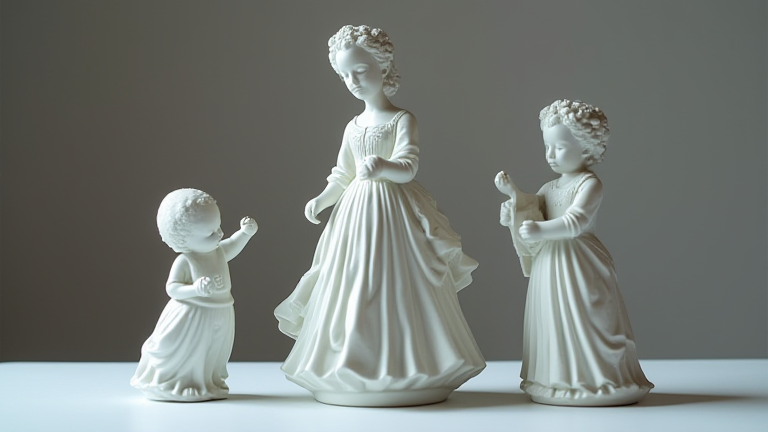
Top Tech Tools for Digitizing Porcelain Figurines
TL;DR: The most effective tools for digitizing porcelain figurines are high-resolution structured light 3D scanners and advanced photogrammetry software. These technologies capture intricate surface details and delicate glaze textures without damaging the fragile ceramic objects.
The Rise of Non-Invasive Capture
Porcelain figurines and sculptures represent a unique challenge in digital preservation. Their glossy, often reflective surfaces and delicate, thin structures make them prone to damage during traditional measurement processes. However, recent advancements in non-contact imaging have revolutionized how museums, collectors, and artists approach these items. The latest developments focus on capturing sub-millimeter accuracy while handling the complex reflectivity of glazed ceramics. This shift allows for the creation of precise digital twins that can be used for restoration planning, virtual exhibitions, and even 3D printing of replacement parts for broken pieces.
If you want to dig deeper, check out our guide on Can Porcelain Figurines Reduce Stress? Surprising Health Ben.
Leading Hardware Solutions
Structured light scanners have emerged as the industry standard for porcelain. Devices like the Artec Leo or the Revopoint Metro use projected light patterns to calculate surface depth. Unlike laser scanners, which can struggle with shiny surfaces, structured light systems are better equipped to handle the specular highlights common on glazed figurines. These tools typically offer resolutions ranging from 0.02mm to 0.1mm, sufficient to capture the finest brushstrokes and sculpted details. For those with limited budgets, high-end smartphone photogrammetry setups are gaining traction. By capturing hundreds of overlapping photos from various angles, specialized software can reconstruct a 3D model. While less precise than dedicated scanners, this method is becoming surprisingly effective for smaller figurines when combined with proper lighting rigs to mitigate glare.
Software and Processing Power
Hardware is only half the equation; software processing is critical for porcelain. Algorithms must now account for “specular reflection,” a phenomenon where light bounces directly off the glossy surface, creating data voids or noise. Modern software suites like AgiSoft Metashape or RealityCapture feature advanced multi-view stereo algorithms that fill these gaps intelligently. Additionally, texture mapping tools have improved significantly, allowing for the separation of geometry and color. This is vital for porcelain, where the physical shape and the painted glaze are distinct features. The ability to export clean, watertight meshes to formats like OBJ or STL enables seamless integration with 3D printing software, allowing for the reproduction of lost or damaged figurines with high fidelity.
Industry Impact and Future Trends
The impact on the industry is profound. Museums can now offer high-definition 360-degree views of their collections online, enhancing accessibility. Restoration specialists can use digital models to simulate repairs before applying physical interventions, reducing the risk of further damage. Furthermore, the rise of NFTs and digital art has created a new market for high-fidelity digital porcelain sculptures. Artists are now creating original designs intended for 3D printing in ceramic or resin, closing the loop between digital creation and physical manifestation. As sensor technology becomes cheaper and more compact, we expect to see portable scanning solutions that allow collectors to digitize their personal collections at home with professional-grade accuracy. The future lies in AI-assisted processing, which will automatically correct noise and enhance details, making the digitization of fragile porcelain more accessible and reliable than ever before.
FAQ
Q: Can I scan a glossy porcelain figurine without using matte spray?
A: Yes, modern structured light scanners and photogrammetry software can handle glossy surfaces without destructive matte sprays by using polarization filters and advanced algorithmic noise reduction techniques.
Q: What is the minimum resolution needed for accurate porcelain digitization?
A: A resolution of at least 0.1mm is generally recommended to capture fine sculptural details, while 0.02mm is ideal for preserving subtle glaze textures and small cracks.
Q: Are 3D printed replicas of porcelain figurines legally acceptable?
A: It depends on copyright status; reproducing public domain pieces is generally allowed, but commercializing protected
Leave a Reply