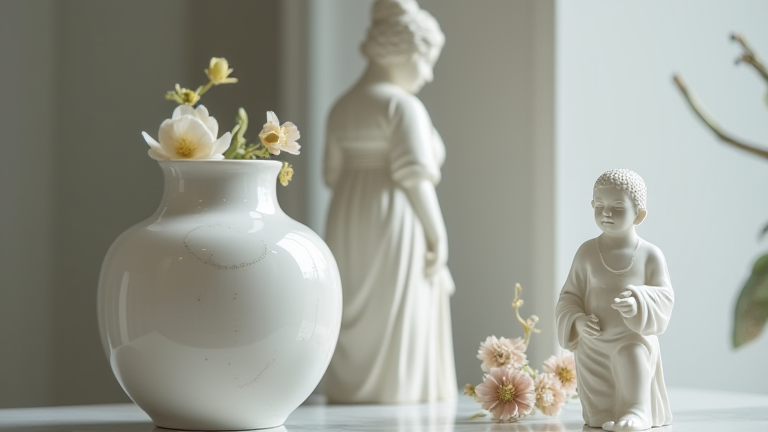
TL;DR: Porcelain figurines are not dusty relics; they are sculptural anchors that bring narrative warmth and curated elegance to modern interiors. By choosing pieces that reflect your travels or cultural heritage, you transform mere decoration into a personal gallery of timeless style.
The Art of the Object: More Than a Shelf Ornament
In an era of mass-produced minimalism, the porcelain figurine stands as a quiet rebellion—a hand-painted testament to patience and craft. Unlike flat art or generic vases, these three-dimensional sculptures invite touch, contemplation, and a shift in perspective. A single, well-chosen piece—say, a delicate Meissen-style shepherdess or a contemporary abstract bust—can elevate a console table from functional to focal. The secret lies in curation: resist clutter and opt for one or two statement pieces that speak to your personal journey. That chipped figurine from a Kyoto flea market or a hand-glazed dancer from a Lisbon atelier carries stories that no print can replicate.
If you want to dig deeper, check out our guide on Porcelain Figurines & Sculptures: Timeless Art for Your Home.
Travel, Memory, and the Souvenir Reimagined
Your home should be a passport of experiences, and porcelain offers a sophisticated way to document them. Instead of magnet collections, start a tradition: each trip, acquire a small figurine that embodies the local aesthetic—a cobalt-blue Delft windmill from the Netherlands, a matte-white Haniwa warrior from Japan, or a whimsical Capodimonte flower from Naples. Display these not as tourist trophies but as curated artifacts on a dedicated shelf or inside a glass-front cabinet. This practice transforms travel from a fleeting escape into a lasting dialogue with your daily environment. Moreover, the tactile ritual of dusting and repositioning these pieces becomes a mindful meditation, a mini-retreat that grounds you in the present while honoring your past adventures.
Cultural Depth and Personal Growth Through Porcelain
Porcelain figurines are cultural time capsules. A Qing dynasty immortal teaches you about patience and symbolism; a 1920s Art Deco dancer reflects the optimism of an era. By researching the history of your pieces, you engage in a low-key form of lifelong learning. This intellectual curiosity spills into your lifestyle—you begin to notice details in architecture, fashion, and even cuisine. Furthermore, the act of styling these figures—pairing a stark white figurine against a dark velvet backdrop or grouping three figures of varying heights for dynamic rhythm—hones your design eye. This creative problem-solving is a subtle form of personal growth, building confidence in your aesthetic decisions. Your home becomes a studio where every object is a lesson and a muse.
Practical Styling for the Modern Home
To avoid a museum-like feel, integrate figurines with intention. Place a single, large figure on a stack of hardcover books in the living room. Use a small pair of figurines as bookends in your study—these are functional sculptures. In the dining room, a centerpiece of a porcelain fruit bowl or a pair of birds can anchor a table setting without overwhelming it. The key is contrast: mix glossy porcelain with matte wood, delicate forms with chunky knit throws, and antique pieces with industrial metal frames. This tension creates visual interest and prevents your collection from feeling dated. Remember, timeless style is not about following trends; it’s about surrounding yourself with objects that hold meaning and beauty, and porcelain delivers that in spades.
FAQ
Q: How do I clean and maintain porcelain figurines without damaging them?
A: Dust regularly with a soft, dry sable brush or a makeup brush. For deeper cleaning, use a slightly damp microfiber cloth with mild soap, then dry immediately. Never soak them, and avoid harsh chemicals or ultrasonic cleaners, which can strip hand-painted details.
Q: Can I mix modern and antique porcelain figurines in one room?
A: Absolutely. The contrast is visually dynamic. Pair a minimalist contemporary piece (like a white geometric bust) with a ornate 19th-century romantic figure. Use a common color palette (e.g., all-white or blue-and-white) to unify the grouping, creating cohesion despite different eras.
<p
Leave a Reply