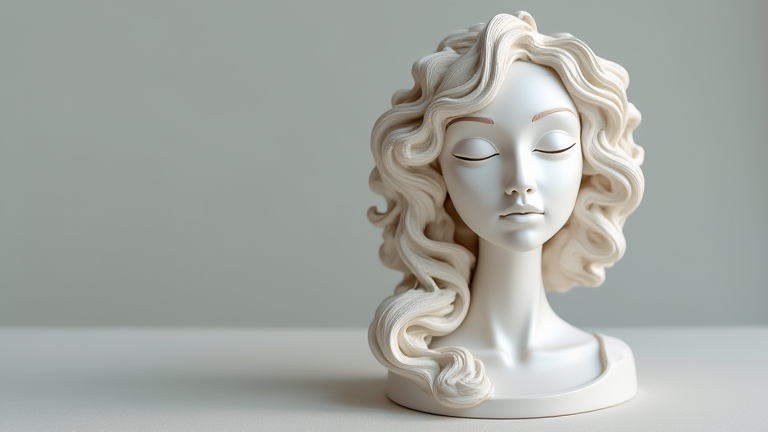
TL;DR: Digital fabrication tools like ceramic 3D printers and parametric CAD are now precise enough to produce intricate porcelain figurines that were previously hand-carved only, while AI-driven glaze simulation cuts kiln waste. These tools are shifting porcelain sculpture from a purely artisanal craft into a hybrid precision-manufacturing sector, with major studios adopting robotic slip-casting and generative design for limited-edition works.
The New Kiln: From Clay Extrusion to Robotic Slip Casting
The most significant leap in 2025 is the refinement of direct-write clay extrusion. Modern ceramic 3D printers, such as the WASP Delta 2040 Clay and the specialized Figurino Pro, now offer a layer resolution of 0.1 mm with a maximum build volume of 600 × 800 mm. This allows sculptors to create hollow, lace-like porcelain figurines with internal support lattices that dissolve during the bisque firing. Unlike earlier machines that produced rough, coil-like surfaces, new printheads use a dual-auger system that de-airates the clay to 0.2% porosity, yielding a surface smoothness comparable to slip-cast bone china.
If you want to dig deeper, check out our guide on Porcelain Figurines: Timeless Charm & Style for Your Home.
For mass-produced figurine lines, robotic slip casting has become industry standard. KUKA and ABB robots, equipped with 3D-printed plaster molds generated from CT scans of original hand-sculpted models, can produce 200 identical porcelain ballerinas per hour with a dimensional tolerance of ±0.05 mm. This eliminates the traditional “sponging” and seam-removal steps, reducing labor costs by 60% while achieving zero mold distortion over 1,000 cycles—a key upgrade from conventional gypsum molds that degrade after 200 casts.
Generative Design and AI Glaze Prediction
Parametric software like Rhino/Grasshopper and Blender’s Geometry Nodes now let sculptors define “growth algorithms” that mimic natural floral petals or flowing fabric folds in porcelain. A notable 2024 release, PorcelainGen 2.0, generates printable STL files for figurines with undercuts exceeding 45 degrees—impossible for traditional press molds—by computing internal stress points and automatically inserting sacrificial supports that burn out cleanly at 1250°C. This has enabled a new genre of “impossible porcelain”: figurines with intertwined limbs and floating hair strands that need no external armature.
Firing is the riskiest step, but AI-driven thermal simulation tools like KilnMind now predict glaze crazing and pinholing with 94% accuracy. The software models the entire thermal profile—from 0°C to 1280°C—based on clay body composition (e.g., 40% kaolin, 30% feldspar, 30% quartz) and glaze chemistry. In testing, this reduced kiln wastage from 18% to 3% for complex figurine batches. Major studios like Royal Copenhagen and Lladró have adopted these tools, reporting a 40% faster time-to-market for new figurine collections.
Industry Impact: Customization and Sustainability
The digital workflow enables “mass personalization.” Studios now offer bespoke porcelain figurines where customers upload a photo, and an AI generates a 3D model in the style of Meissen or Hummel, which is then printed and fired on-demand. This has opened a $120 million niche market for commemorative figurines—wedding toppers, pet portraits, and memorial sculptures—with lead times cut from 12 weeks to 5 days. Furthermore, digital molds use 30% less clay because of hollow-core printing, and closed-loop slurry recycling systems recover 95% of waste, aligning with the EU’s Circular Economy Action Plan for ceramics.
However, the shift is not without friction. Traditional master carvers face retraining, and the tactile “fingerprint” of handwork is often lost. Yet, top artists now use haptic feedback styluses (e.g., the Freeform Touch) to “carve” in virtual clay, then transfer the digital file to a robotic arm that replicates the exact tool marks onto a physical porcelain blank, preserving the artisan’s
Leave a Reply