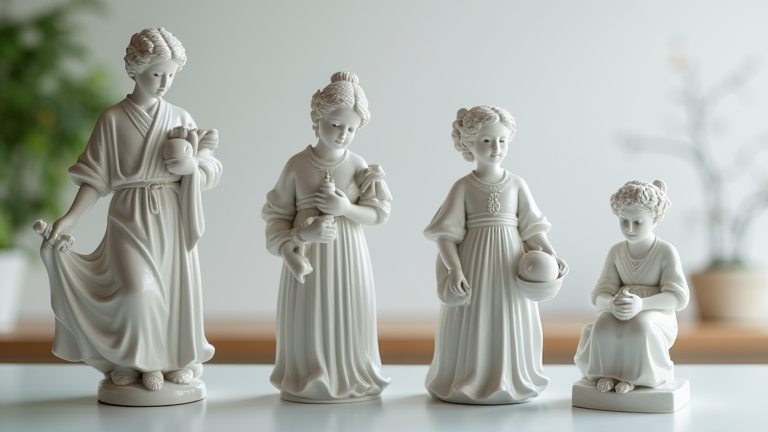
TL;DR: Protect your porcelain collections by maintaining stable indoor temperatures and humidity levels to prevent thermal shock and cracking. Handle pieces with clean, dry hands and dust regularly using soft, dry tools to preserve their glossy finish and structural integrity.
The Science of Material Stability
Porcelain is a ceramic material made by firing clay at high temperatures, resulting in a dense, non-porous surface. While this gives it its characteristic white color and translucency, it also makes the material brittle. According to materials science, porcelain has low thermal shock resistance. Sudden changes in temperature, such as moving a figure from a cold storage area to a warm living room, can cause the material to expand or contract unevenly. This stress creates micro-fractures that may lead to catastrophic failure. To mitigate this, keep your sculptures in an environment where the temperature remains constant. Avoid placing them near radiators, air conditioning vents, or windows that receive direct, intense sunlight. Ultraviolet radiation can also degrade the glaze over time, causing colors to fade and the surface to become chalky. Indirect, filtered light is the safest choice for display.
If you want to dig deeper, check out our guide on Invest in Porcelain Sculptures: Art, Value & Care Guide.
Daily Care and Handling Protocols
Proper handling is crucial to prevent accidental damage. Always wash your hands thoroughly before touching your figurines. Oils, lotions, and dirt from your skin can leave permanent residue on the glossy glaze, which is difficult to remove without abrasive cleaning that might scratch the surface. When lifting a piece, support its weight evenly with both hands, ensuring you are gripping the base or a sturdy part of the figure rather than delicate appendages like wings, hats, or thin limbs. For cleaning, use a soft, lint-free microfiber cloth that is dry. If a piece is dusty, gently brush it with a soft, natural hairbrush. Avoid using liquid cleaners, as water can seep into tiny cracks or hairlines, potentially causing expansion and further damage. If a spill occurs, wipe it immediately with a barely damp cloth, ensuring no water remains on the surface.
Storage and Environmental Monitoring
When not on display, store your porcelain in a padded box lined with acid-free tissue paper. This protects against dust and minor bumps. Use a hygrometer to monitor the humidity in your display area, aiming for a relative humidity between 40% and 50%. While porcelain is less sensitive to humidity than wood or paper, extreme fluctuations can affect any organic elements attached to the sculpture, such as fabric clothing or wooden bases. By adhering to these science-backed practices, you ensure that your artistic investments remain vibrant and intact for generations to enjoy.
FAQ
Q: Can I use glass cleaner to polish my porcelain?
A: No, avoid glass cleaners as they often contain ammonia or alcohol that can degrade the glaze over time. Use only a dry, soft cloth for routine maintenance.
Q: Is it safe to wash my figurines under running water?
A: No, avoid submerging or running water over the pieces. Water can penetrate microscopic cracks and cause internal stress. Spot clean gently if necessary.
Q: How should I store large, heavy sculptures?
A: Keep large pieces on stable, non-vibrating surfaces away from foot traffic. If storing, wrap them in bubble wrap and secure them in a sturdy box to prevent shifting.
Leave a Reply