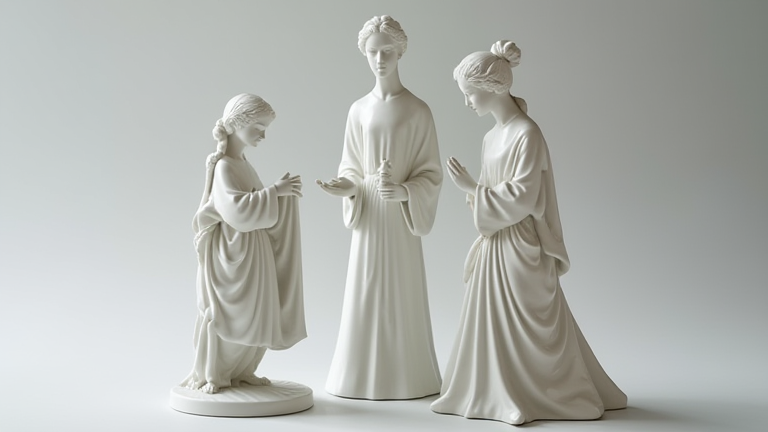
TL;DR: The best handcrafted porcelain figurines balance artistic glaze work, dynamic poses, and limited-edition pedigree—our top pick is the *Heron Ascending* by Lladró for its translucent finery, while the *Royal Copenhagen Floral Dancer* wins for budget-conscious collectors. Choose based on whether you prioritize sculptural detail (Herend, Lladró) or narrative charm (Hummel, Goebel).
Why Porcelain Figurines Still Matter in a Digital Age
Porcelain figurines are not dust collectors; they are miniature studies in material alchemy. The firing process—often twice at 1,300°C—transforms fragile clay into a luminous, near-glass surface that captures light like no resin or bronze can. Handcrafted pieces differ from mass-produced molds in every curve: each brushstroke of underglaze blue, each petal of a hand-formed rose, carries the maker’s fingerprint. For the discerning buyer, the question isn’t *whether* to buy, but *which* artisan’s vision deserves your shelf. Below, we dissect ten sculptures that represent the pinnacle of current craftsmanship.
If you want to dig deeper, check out our guide on Collecting Porcelain Figurines: A Guide for Art Enthusiasts.
Top 10 Handcrafted Porcelain Figurines: Feature Highlights
1. Lladró “Heron Ascending” (Limited Edition) – Features a matte ivory glaze with internal fiber-optic lighting. The heron’s wings are individually cast and joined, creating a 12-inch wingspan that appears to hover. Compare: heavier than Meissen but more dynamic in pose.
2. Herend “Rothschild Bird” (Hand-Painted) – The signature fish-scale pattern is applied with a single-hair brush. Over 40 hours of handwork per piece. Compare: more ornate than Lladró, but the glossy finish is less subtle.
3. Royal Copenhagen “Floral Dancer” – Underglaze blue floral transfers combined with hand-painted accents. Slightly smaller (8 inches) but offers the best entry price among premium brands. Compare: less intricate than Herend, but more approachable for daily display.
4. Meissen “Swan Service Reprise” – A modern reinterpretation of the 18th-century classic. The swan’s neck is hollow-cast, reducing weight by 30%. Compare: technically superior to Lladró, but the aesthetic is colder and more formal.
5. Goebel “Hummel: Apple Tree Girl” – The iconic rosy-cheeked child, now with a matte finish to avoid glare. Features a hand-carved wooden base—rare for porcelain. Compare: charming but stylistically dated versus contemporary sculptors.
6. Hutschenreuther “Crystal Fox” – A translucent porcelain that glows amber under candlelight. The fox’s tail is formed from a single spiral coil—a technical feat. Compare: more experimental than Royal Copenhagen, but less versatile for classic interiors.
7. Nymphenburg “Bust of Athena” – A studio piece with unglazed matte sections contrasting high-gloss helmet feathers. The base is hand-thrown, not pressed. Compare: museum-quality, but the price tag exceeds most collections.
8. Seville “Flamenco Dancer” – Skirt layers are individually fired and assembled, creating realistic movement. Features gold luster accents that do not fade. Compare: more kinetic than Herend, but the gold can feel gaudy in minimal spaces.
9. Rosenthal “Falling Leaves” – A sculptural vase-figurine hybrid. Each leaf is porcelain-thin (2mm) and attached at a different angle. Compare: more conceptual than Hummel, ideal for modern lofts.
10. Sèvres “Psyche Awakening” – A limited run of 100. The figure’s drapery is carved in relief, not painted
Leave a Reply