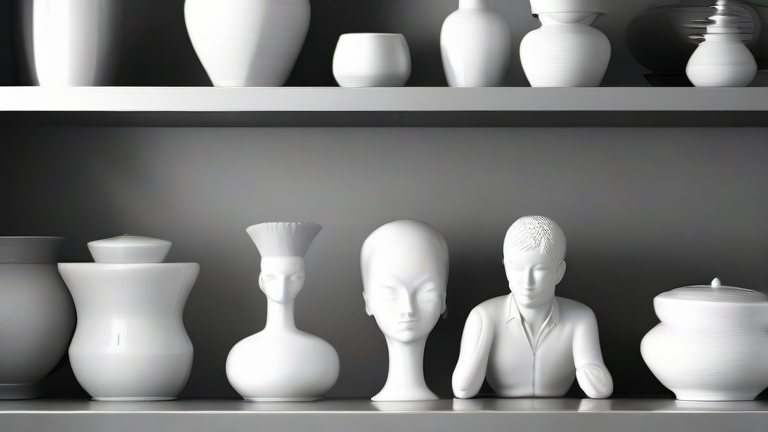
TL;DR: To elevate your home with porcelain figurines, treat them as curated artifacts of personal travel and cultural memory, not just dust collectors. Style them in odd-numbered clusters with contrasting textures and lighting to create intimate vignettes that tell a story of your journeys.
The Art of the Journey: Porcelain as Souvenir, Not Souvenir Shop
We often return from travels with magnets or mass-produced trinkets, but the discerning traveler brings home porcelain figurines—fragile, expressive, and deeply tied to the artisan cultures of places like Meissen, Delft, or Jingdezhen. These aren’t just decorations; they are frozen moments of a place’s aesthetic soul. To elevate your home, stop displaying them as a row of silent soldiers on a shelf. Instead, think of them as soloists in a quiet opera. Place a single, delicate ballerina on a stack of vintage hardcover books in your reading nook. The juxtaposition of her porcelain stillness against the textured cloth spines creates a personal “still life” that whispers of a European gallery visit or a morning in a Kyoto antique shop.
If you want to dig deeper, check out our guide on Porcelain Figurines: Elevate Your Home with Timeless Style.
Cultural Contrasts: Pairing Old World Craft with Modern Minimalism
The most powerful styling trick is contrast. Your porcelain figurine—perhaps a rustic Spanish shepherdess or a Chinese scholar’s attendant—will shine brightest against a backdrop of raw, modern materials. Place it on a slab of unpolished slate on your coffee table, or nestle it among the rough-hewn wood of a rustic console. This cultural dialogue between the delicate, hand-painted glaze and the industrial or organic textures around it creates a sense of intentional curation. For food lovers, consider a tiny porcelain fruit or vegetable sculpture placed next to a ceramic bowl of fresh lemons in the kitchen. It’s a playful nod to still-life painting, bridging the gap between edible abundance and permanent art, and it sparks conversation about the gastronomic traditions of the region where the piece was made.
Personal Growth Through Curation: Editing Your Collection
Styling porcelain is an exercise in personal growth: it teaches you the power of subtraction. We often accumulate figurines from flea markets, inheritances, or gifts, and they end up cluttering our visual space. Elevate your home by editing your collection down to three to five pieces that genuinely resonate with a specific memory or aspiration. Then, give each one room to breathe. A lone figurine on a floating shelf, illuminated by a small, warm LED spotlight, becomes a focal point that encourages mindfulness—a daily reminder to slow down in a fast-paced world. This is not about showing off wealth; it’s about honoring the craftsmanship and the story, which in turn, elevates your own daily environment from chaotic to contemplative.
FAQ
Q: How do I prevent my porcelain figurines from looking dusty or dated?
A: Use a soft, dry makeup brush for weekly dusting and avoid water. To fight the “dated” look, never display them symmetrically. Pair them with a single modern object—like a black geometric candle holder or a brass abstract sculpture—to anchor them in the present.
Q: What is the best placement for a delicate porcelain figurine in a small apartment?
A: Use a window sill with indirect light, but not direct sun (to prevent glaze fading). Alternatively, place one on a stack of books on your nightstand or on the corner of a bathroom shelf—unexpected spots create intimacy and make the piece feel discovered, not staged.
Q: Can I mix porcelain figurines from different cultures?
A: Absolutely, but unify them with a common element. Choose figurines that all share a similar color palette (e.g., white and cobalt blue) or a similar scale (all under 6 inches). This creates a cohesive “world collection” that celebrates global travel rather than a chaotic clash of styles.
Leave a Reply