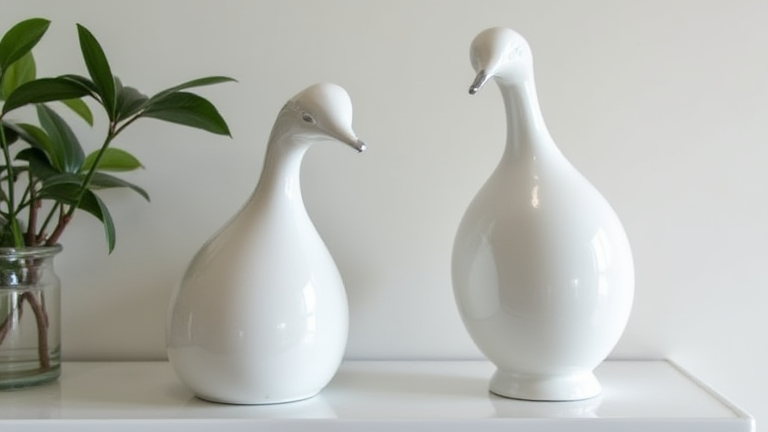
TL;DR: Style porcelain figurines and sculptures by treating them as curated focal points—pair them with contrasting textures, natural light, and negative space to create intimate vignettes. Think of them as tiny travel souvenirs or cultural storytellers, not just dust collectors, to elevate your home’s narrative.
The Art of the Encounter: Why Porcelain Speaks
Porcelain figurines are more than delicate knick-knacks; they are frozen moments of culture, craftsmanship, and personal history. Whether it’s a hand-painted Meissen dancer, a minimalist Japanese Haniwa-inspired bust, or a whimsical contemporary rabbit, these sculptures carry the energy of the places and hands that shaped them. To elevate your home, you must first shift your mindset: these objects are not decoration—they are tiny monuments to taste, travel, and time. The goal is not to fill a shelf, but to stage a conversation.
If you want to dig deeper, check out our guide on Tech in Porcelain: 5 Ways Digital Tools Enhance Sculpture.
Vignette Architecture: Light, Contrast, and Negative Space
Start by editing. Remove half of what you own. A single, well-lit porcelain figure on a wooden console tells a richer story than a crowded cabinet. Pair your figurine with opposite textures: a matte ceramic bowl, a rough linen runner, or a slab of raw slate. The glossy, cool surface of porcelain pops against warm, organic materials. Next, use directional light—a table lamp or a picture light—to cast long, dramatic shadows. This turns a static object into a living sculpture that changes with the hour. Finally, give it room to breathe. Leave at least 10–15 cm of empty space around each piece. Negative space is the luxury that museums understand and busy shelves forget.
Cultural Storytelling: Travel-Inspired Styling
Bring the world home by grouping figurines from different journeys. Place a Delft blue windmill next to a Moroccan zellige-inspired bust, and a small Tang dynasty horse beside a modern Danish porcelain bird. The contrast becomes a visual passport. For a food-focused angle, style figurines near your dining area—a tiny porcelain fruit basket on a sideboard, or a chef figurine on a kitchen shelf. This ties the art to the ritual of eating, making daily meals feel like gallery openings. For personal growth, rotate your pieces seasonally. One month, display a figure that represents a goal (a climbing figure, a meditating monk); the next, one that honors a memory. This practice turns your home into a living journal of your evolution.
Practical Placement Rules
Avoid placing porcelain in direct sunlight—it can fade the glaze. Keep them away from high-traffic edges where sleeves or pets might knock them. Use felt pads under bases to protect surfaces. For a dynamic look, vary heights: use a stack of books, a brass cake stand, or a small marble block as a pedestal. Mixing scales—a tiny figure next to a large vase—creates rhythm. And never cluster more than three figurines together unless they share a clear theme (e.g., all white, all birds, all from one region).
FAQ
Q: How do I dust porcelain figurines without damaging them?
A: Use a soft, dry makeup brush or a camera lens brush for intricate details, and a microfiber cloth for larger surfaces. Never use water or spray cleaners—they can seep into cracks and weaken the glaze. Dust them once every two weeks to prevent buildup.
Q: Can I mix modern abstract sculptures with traditional porcelain figurines?
A: Absolutely—contrast is your friend. Place a sleek, matte-black abstract piece next to a floral Rococo figurine. The tension between old and new creates a curated, gallery-like feel. Just ensure they share a color accent (e.g., both have a hint of gold or white) to unify the pair.
Q: What is the best way to display a single valuable heirloom figurine?
A: Give it a throne. Place it on a slim, clear acrylic or glass stand to elevate it visually. Set it on a
Leave a Reply