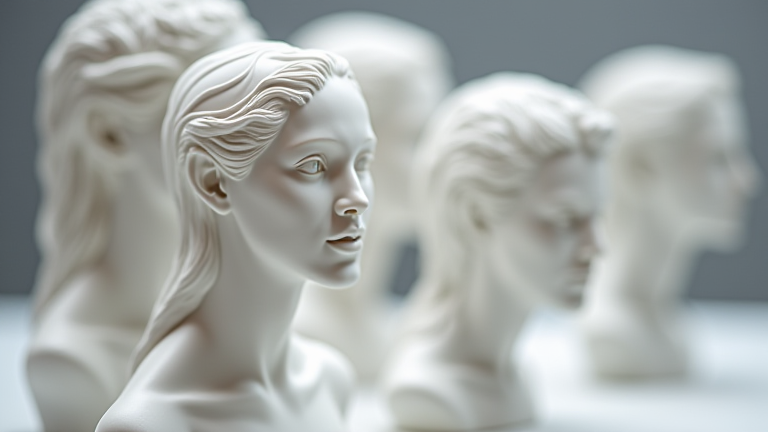
Digital Tech in Porcelain: Scanning & 3D Printing Sculptures
TL;DR: Modern porcelain sculpture now leverages high-precision structured light scanning and material extrusion 3D printing to create complex, unglazed ceramic forms with unprecedented detail. This workflow bridges the gap between digital design and traditional firing, allowing for mass customization and intricate textures that were previously impossible to achieve through manual carving alone.
The Evolution of Digital Ceramic Fabrication
The integration of digital technology into the porcelain industry has fundamentally altered how artists and manufacturers approach sculpture creation. Traditionally, creating a porcelain figurine required months of manual wheel throwing, hand carving, and delicate assembly of fragile parts. Today, the process begins in the digital realm. Artists design sculptures using CAD software, focusing on specific constraints such as wall thickness and support structures that ensure the piece survives the high-temperature firing process. This shift is not merely about speed; it is about achieving geometries that defy traditional handcrafting limitations, such as self-supporting overhangs and microscopic surface textures that mimic natural stone or fabric.
If you want to dig deeper, check out our guide on Top 10 Sustainable Sneaker Trends Reshaping Streetwear Fashi.
Scanning Technology: Capturing Reality
For existing physical models or intricate organic shapes, high-resolution 3D scanning is the critical first step. The latest developments in structured light scanners, such as the Artec Leo II and Scan2CAD systems, offer sub-millimeter accuracy, capturing details down to 0.02mm. This precision is vital for porcelain, where even minor dimensional errors can lead to warping or cracking during the bisque firing. Recent advancements include real-time noise reduction algorithms that allow for scanning glossy or semi-transparent objects without the need for spray coating, which would otherwise ruin the delicate surface finish of a prototype. These scanners generate dense point clouds that are converted into watertight mesh files, ready for digital cleanup and optimization. The ability to scan a physical clay maquette and immediately convert it into a printable digital file has drastically reduced the iteration cycle for sculptors.
3D Printing Specifications and Materials
Once the digital model is finalized, it is sent to a 3D printer capable of handling ceramic slurries. The primary technology used is Material Jetting or Ceramic Stereolithography. Leading machines like the ExOne Ceramic Production System 10000 and the EOS P430 utilize specialized photo-curable resins mixed with fine ceramic powder, typically zirconia or alumina, which are sintered into porcelain. The layer thickness for these machines typically ranges from 10 to 50 microns, allowing for the reproduction of extremely fine details such as facial features and hair strands. The green body, or the printed piece before firing, is fragile and must be carefully removed from the support material. After printing, the object is sintered in a kiln at temperatures exceeding 1,400°C. This process shrinks the object by approximately 20% to 25%, a factor that must be precisely accounted for in the initial CAD design to ensure the final dimensions are correct.
Industry Impact and Future Trends
The impact on the industry is profound. Manufacturers can now offer personalized porcelain figurines, allowing customers to upload digital avatars or scan their own pets for unique keepsakes. This capability supports small-batch production runs that are economically viable, reducing waste associated with traditional mold-making. Furthermore, the ability to simulate the firing process digitally helps predict potential failure points, such as thermal shock resistance. As algorithms improve, we expect to see further convergence between digital design and material science, leading to porcelain sculptures with variable density and internal structures that enhance both aesthetic appeal and structural integrity. The future of porcelain sculpture lies in this seamless digital-to-physical pipeline, where creativity is no longer bound by the limitations of human hands but is instead limited only by the resolution of the printer and the imagination of the designer.
FAQ
Q: Can 3D printed porcelain be glazed like traditional ceramics?
A: Yes, after sintering, the porous surface can be sealed with standard ceramic glazes and fired again, allowing for a wide range of colors and
Leave a Reply