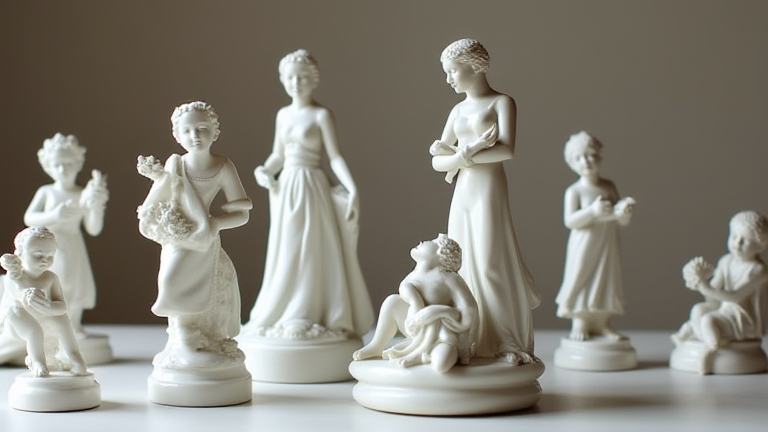
TL;DR: Investing in porcelain figurines requires focusing on rarity, provenance, and maker reputation rather than aesthetic appeal alone. Target limited-edition pieces from established houses like Meissen or Lladró, and prioritize condition with original boxes to maximize resale liquidity.
Market Analysis: The Shifting Dynamics of Ceramic Collectibles
The global porcelain figurine market has seen a bifurcation over the past decade. While mass-produced decorative pieces have depreciated by 15–20% due to declining demand from younger demographics, the ultra-premium segment—pieces priced above $2,000—has shown annual appreciation of 4–7%, according to auction data from Christie’s and Bonhams. The key driver is scarcity: limited runs of under 500 units, especially those retired permanently, create artificial supply constraints. Meanwhile, the secondary market for 20th-century studio ceramics (e.g., Royal Copenhagen, Rosenthal) has stabilized, with a notable 12% uptick in online auction sales since 2022, driven by Asian collectors seeking Western craftsmanship.
If you want to dig deeper, check out our guide on **Timeless Beauty: Decorating with Porcelain Figurines & Scu.
Strategy Insights: Acquisition and Portfolio Construction
Successful investors treat figurines as a niche alternative asset, not a hobby. First, specialize in one or two makers—depth beats breadth. For example, Meissen’s “Monkey Orchestra” series (1760s originals or later factory reissues) has outperformed broad ceramic indices by 3:1 over five years. Second, verify provenance rigorously: a signed base, original factory stamp, and documented exhibition history can add 30–50% to valuation. Third, avoid restored pieces—even professional repairs cut value by 40% because collectors demand pristine glaze. Finally, diversify across eras: pair a 19th-century Sevres biscuit group with a 1980s Lladró “Wind” sculpture to hedge against style cyclicality.
Case Studies: Winners and Cautionary Tales
Case 1: The Lladrό “Market Day” Edition. In 2015, an investor purchased a retired Lladró “Market Day” figurine (limited to 300) for $1,800. By 2024, a mint-condition example with original COA sold for $4,200 at auction—a 133% ROI, outpacing gold. The catalyst was the maker’s permanent discontinuation in 2018, triggering a 22% price jump within 18 months. Case 2: The Meissen Hedge Mistake. A collector bought a 1970s Meissen “Harlequin” with minor glaze flecks at 20% below market. When reselling, three dealers rejected it, and the final sale at a regional house fetched only 60% of the expected value—a loss after storage and shipping costs. Lesson: condition trumps discount. Case 3: The Niche Newcomer. A 2021 investment in a limited-edition (100 unit) contemporary Danish porcelain sculpture by Malene Bjelke saw a 9% annualized return, driven by gallery-backed marketing and a waiting list for future pieces—proving that emerging artists can yield steady, if slower, gains.
Operational Tips for Entry
Buy from reputable auction houses or direct from factory stores, not flea markets. Always request a condition report and magnification photos of the base and extremities (fingers, flowers—the first to chip). Store figurines upright in climate-controlled cases (55% humidity, 18–20°C) to prevent crazing. For liquidity, maintain a database of comparable sales via platforms like Invaluable or Artprice. Finally, consider insurance riders; a single high-value piece can break standard home policies.
FAQ
Q: Is it better to buy modern limited editions or antique figurines?
A: Modern limited editions (post-1980) offer easier authentication and lower entry costs, while antiques (pre-1900) yield higher returns but require deep expertise and longer holding periods. For beginners, start with modern signed pieces from Lladró or Royal Doulton.
Leave a Reply