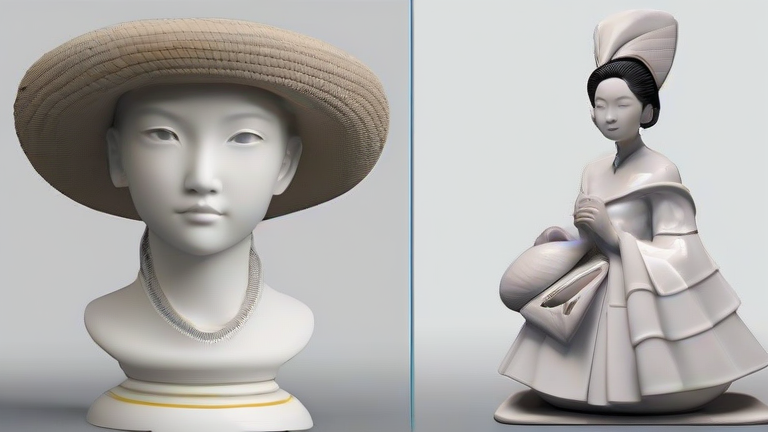
TL;DR: Modern porcelain sculptors are merging centuries-old clay craftsmanship with digital photogrammetry, 3D-printed molds, and AI-driven kiln analytics to achieve impossible precision and repeatability. These tools reduce waste by up to 40% while enabling complex undercuts and latticework that traditional hand-building cannot reliably produce.
The Digital Workflow: From Clay to CAD
The most significant shift in porcelain figurine production is the adoption of hybrid workflows. Sculptors now begin with physical clay maquettes, which are digitized using handheld 3D scanners with 0.02mm accuracy (e.g., Artec Space Spider or EinScan Pro HD). This point-cloud data is converted into non-destructive CAD models in software like ZBrush or Rhino, allowing for parametric adjustments—such as scaling a figurine’s drapery thickness or adjusting the center of gravity for kiln safety—without rebuilding the original. The latest scanning systems also capture underglaze texture maps, preserving brushstroke details that were previously lost in mold-making.
If you want to dig deeper, check out our guide on Handcrafted Porcelain Figurines & Sculptures: Timeless Art.
3D-Printed Molds and Lost-Wax 2.0
Traditional plaster molds are brittle and degrade after 20–30 casts. Digital sculptors now print master molds using SLA resin printers with a 25-micron layer height, then cast them in high-temperature silicone or gypsum. For complex figurines with internal voids (e.g., hollow ballerina skirts), sculptors use soluble PVA 3D-printed cores that dissolve in water, leaving a perfectly uniform wall thickness of 3–5mm. This prevents kiln cracking from thermal shock. New ceramic-resin hybrid filaments, such as Porcelain-Lay 3D, contain 60% real kaolin and can be printed directly, though they require a two-stage firing: a 900°C bisque, then a 1280°C glaze firing.
AI Kiln Analytics and Predictive Shrinkage
Porcelain shrinks 12–18% during firing, historically a major source of rejects. Modern electric kilns now integrate AI-driven predictive algorithms that monitor humidity, heating ramp rates, and in-situ pyrometry via fiber-optic sensors. These systems, like the KilnBrain v4, calculate shrinkage in real time and adjust the firing curve to compensate for clay batch variations. For sculptors, this means the final piece’s dimensions match the CAD model within 0.5mm—a breakthrough for series production of collectible figurines. Additionally, thermal imaging cameras inside the kiln detect micro-cracks before they propagate, allowing for automated cooling pauses that heal fissures in the vitreous phase.
Industry Impact: From Bespoke to Batch
Luxury porcelain houses (e.g., Meissen, Lladró) now use digital twin libraries of their classic figurines, enabling on-demand reproduction with 98% fidelity. Smaller studios benefit from desktop CNC milling for negative molds, reducing lead time from 8 weeks to 5 days. However, the market has seen a pushback: hand-finishing remains vital for high-end pieces, as digital tools cannot replicate the subtle finger-pressure variations that give porcelain its living quality. Hybrid pricing models now dominate—digital-first production for base forms, with hand-painting and glazing reserved as premium add-ons. The global market for tech-enhanced ceramic sculpture is projected to grow 11% annually, reaching $480M by 2027, driven by custom memorial figurines and miniature architectural collectibles.
FAQ
Q: Can 3D-printed porcelain figurines be sold as “authentic” porcelain?
A: Yes, if the material contains at least 50% kaolin and undergoes proper vitrification firing. Many galleries now accept digitally-assisted pieces as long as the artist discloses the hybrid process, but traditionalists may require hand-tooling evidence on the final surface.
Q: What is the minimum cost to start with digital tools for porcelain sculpting?
A: A budget setup—including a structured-light scanner (e.g., Revopoint POP 3), a 4K resin printer
Leave a Reply