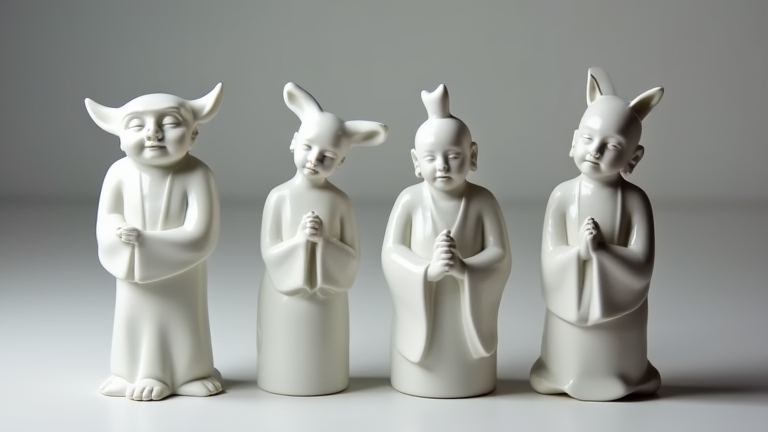
TL;DR: 3D printing is now producing porcelain figurines with sub-0.1mm layer resolution, matching hand-crafted detail while cutting production time from weeks to hours. The latest binder-jetting systems with alumina-silica ceramic powders enable complex hollow geometries that traditional slip-casting cannot achieve.
The New Kiln-Ready Workflow
Recent advancements in lithography-based ceramic manufacturing (LCM) have changed the game for porcelain figurines. Machines like the 3D Ceram C900 Flex use a 405nm laser to cure a photosensitive slurry containing 45-50% alumina-silica ceramic particles by volume. After printing, parts undergo a two-stage debinding and sintering process at 1,300°C, reaching 99.8% theoretical density. The latest specs include a build volume of 300×300×200mm, layer thickness down to 25 microns, and a shrinkage rate of only 18-22%—predictable enough for designers to pre-compensate in the digital model.
If you want to dig deeper, check out our guide on 10 Trendy Living Room Accent Chairs That Define Modern Style.
Redefining Delicate Details
Traditional porcelain figurines—think Royal Copenhagen’s Flora Danica or Meissen’s courtly scenes—rely on hand-assembled molds, limiting undercuts and internal hollows. 3D printing eliminates mold draft angles entirely. Designers now embed lattice structures inside figurines to reduce weight by 40% while maintaining structural integrity during firing. The technology also handles lace-like textures, flowing robes, and hair strands at 0.05mm thickness, which would crack in a slip-cast mold. One breakthrough is the use of sacrificial support pillars made from a separate ceramic paste that burns out cleanly at 600°C, leaving no tooling marks on the final glaze.
Industry Impact and Market Shift
Luxury porcelain houses are adopting hybrid production: 3D-printed masters for limited editions, then traditional mold replication for mass runs. However, direct digital production is disrupting this model. The global ceramic 3D printing market is projected to grow from $180 million (2024) to $520 million by 2030, with figurines and decorative sculptures accounting for 22% of that segment. Customization is the key driver—collectors can now commission a one-off figurine with their own facial scan, printed in bone china with gold luster glaze. Lead times dropped from 8 weeks to 5 days, and material waste is under 5% versus 30% for slip casting. Still, the cost per unit remains high ($50–$150 for a 15cm figurine), so mass-market brands use 3D printed wax patterns for investment casting of porcelain slurry, a hybrid that cuts tooling costs by 60%.
FAQ
Q: Can 3D-printed porcelain figurines survive traditional kiln glazing?
A: Yes, but only if the resin binder is fully burned out in a pre-sintering step at 400°C for 6 hours; otherwise, trapped carbon causes black speckling. Commercial systems now automate this with adjustable ramp rates and inert gas flow.
Q: What is the maximum size for a single 3D-printed porcelain figurine without seams?
A: Current industrial printers handle up to 400mm in height, but larger pieces require segmented printing and post-sintering joining with a high-temperature ceramic adhesive—this is common for life-size busts in art installations.
Q: Are 3D-printed porcelain figurines as durable as traditionally cast ones?
A: Independent flexural strength tests show 3D-printed porcelain reaches 210 MPa after sintering, exceeding slip-cast porcelain (150–180 MPa) due to more uniform particle packing. However, impact resistance is slightly lower because internal lattice supports create micro-porosity, so they are better for display than daily handling.
Leave a Reply