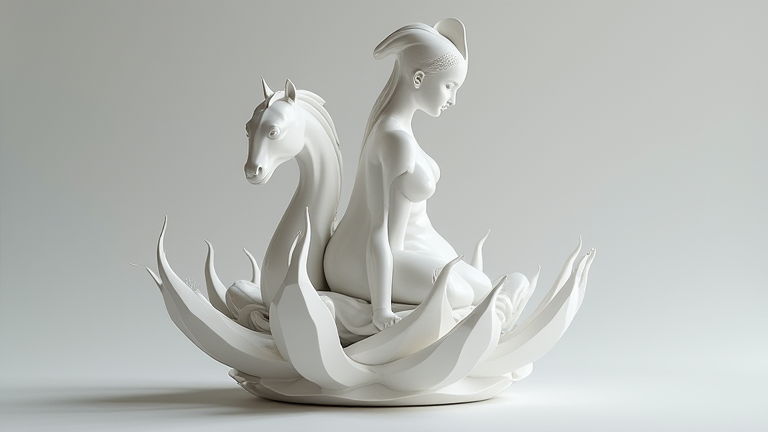
TL;DR: 3D printing is now producing porcelain sculptures with micron-level precision, eliminating the centuries-old limitations of hand-throwing and mold casting. This technology enables latticework, undercuts, and hollow geometries that are physically impossible to create by hand, while maintaining the material’s authentic translucent and vitreous qualities.
From Clay to Code: The New Ceramic Workflow
The latest generation of porcelain 3D printers, such as the WASP 40100 Clay and the Delta WASP 2040 PRO, have shifted from experimental novelties to production-grade tools. These systems use a screw-based extrusion head that handles high-viscosity porcelain paste—typically a blend of kaolin, feldspar, and quartz—with particle sizes below 20 microns. The key breakthrough is in the deposition algorithm: it now simulates coil-forming techniques, but with a layer height of just 0.2 mm. This allows for a surface finish that, after bisque firing at 1000°C and glaze firing at 1280°C, rivals traditional slip-cast porcelain.
If you want to dig deeper, check out our guide on Top 10 Porcelain Figurines & Sculptures: A Collector’s Guide.
Specs That Matter: Precision, Shrinkage, and Support
Critical specs for porcelain figurine printing include a build volume of at least 300 x 300 x 400 mm to accommodate statuettes, and a print speed of 15–30 mm/s to prevent clay from tearing. The most significant engineering hurdle is drying shrinkage—porcelain contracts by 15–18% during firing. Modern printers compensate with a shrinkage factor pre-set in the slicer, scaling the digital model by 1.18x in X, Y, and Z axes. Additionally, new soluble support materials (based on PVA and cellulose) dissolve in water without leaving ash residue, enabling the printing of suspended arms, flowing robes, and intricate dragon scales that would snap under their own weight in traditional clay.
Industry Impact: On-Demand Figurines and Bespoke Collectibles
Commercial porcelain studios like Dusen Dusen Ceramics and Figurine Labs now offer fully custom 3D-printed figurines—from miniature zodiac animals to 40-cm Art Deco dancers—with a turnaround of 72 hours instead of six weeks. The technology has also democratized the luxury market: a single digital file can be printed on demand, eliminating the need for costly plaster molds that degrade after 50 casts. For limited-edition sculptures, artists now embed QR codes inside hollow cavities during printing, enabling authentication and provenance tracking. Furthermore, the ability to print in a single piece—rather than assembling separate limbs—reduces breakage points, making shipping of delicate porcelain figurines safer and cheaper.
Material Innovations and Post-Processing
Recent research from the University of Applied Arts Vienna has introduced a self-glazing porcelain filament that contains feldspathic flux agents. When fired, these agents migrate to the surface, creating a glassy finish without a separate dip-glazing step. This eliminates the risk of glaze pooling in fine crevices, which often ruined intricate prints. For colored figurines, manufacturers now use metal-oxide-doped pastes (cobalt for blue, copper for green) that retain their hue through high-temperature firing, bypassing the need for overglaze painting. The final result is a porcelain sculpture with a hardness of 7 on the Mohs scale, identical to traditional ware, but with geometric complexity that elevates it from craft to computational art.
FAQ
Q: Can 3D-printed porcelain figurines be used for tea sets or functional tableware?
A: Yes, but with a caveat. The printer can produce cups, teapots, and plates with food-safe glazes, but the layer lines may trap bacteria if not fully covered. Most current products focus on decorative sculptures; functional ware requires additional polishing and a thick, liquid glaze applied post-print to seal the surface.
Q: What is the maximum size of a porcelain sculpture that can be printed today?</strong
Leave a Reply