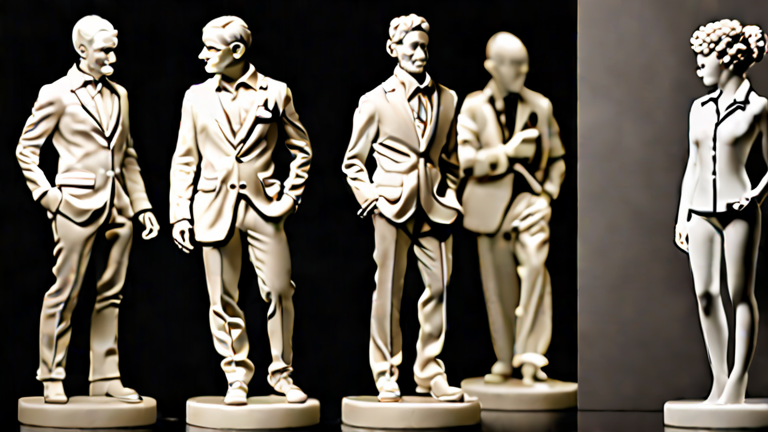
TL;DR: Modern structured-light 3D scanners and multi-material resin printers now let studios digitize and reproduce porcelain figurines with sub-0.05 mm accuracy, enabling faithful restoration, scaling, and limited-edition production. This workflow is reshaping how porcelain workshops design, archive, and monetize sculptural art.
From Kiln to CAD: The New Porcelain Pipeline
Porcelain figurines—from Meissen shepherdesses to Capodimonte florals—have traditionally depended on hand-carved plaster molds and decades of artisan skill. Today, a scanner such as the EinScan HX or Shining 3D Transcan C can capture a glazed figurine at 0.02–0.05 mm point accuracy in under ten minutes, even handling the glossy, translucent surfaces that once defeated photogrammetry. Blue-light structured scanning combined with cross-polarized illumination now reads fine details like lace ruffles, petal veins, and painted facial features without spraying matte coating on the piece.
If you want to dig deeper, check out our guide on Tech in Porcelain: 5 Innovations Revolutionizing Sculpture.
Printing the Impossible in Clay and Resin
On the output side, LCD and DLP resin printers with 22–35 µm XY resolution reproduce undercuts and hollow interiors that plaster casting cannot. More significantly, ceramic-filled photopolymer resins—loaded with 40–60% porcelain powder—can be printed, debinded, and sintered into true porcelain. Companies like Tethon 3D and Liqcreate now offer such formulations, shrinking roughly 15–20% during firing while retaining glaze compatibility. For restoration, this means missing fingers, petals, or bases can be printed, fired, and blended invisibly into an antique.
Industry Impact
European manufactories are using scan-to-print archives to future-proof fragile master models. Limited editions can be scaled from 15 cm to 60 cm without re-sculpting. Restorers report 70% faster turnaround on complex repairs. The antique market is also shifting: authenticated scans serve as provenance records, while museums produce handling replicas without risking originals. Critics note that uncontrolled copying threatens artisan value, prompting some houses to embed micro-signatures in printed greenware.
FAQ
Q: Can 3D printing really match hand-painted porcelain detail?
A: Printing captures sculptural form precisely, but underglaze painting remains largely manual; hybrid workflows print the body and artists hand-finish decoration.
Q: Is scanning safe for antique glazed figurines?
A: Yes—non-contact optical scanning requires no surface treatment and poses no risk when the piece is properly supported.
Q: What does a starter porcelain scanning setup cost?
A: Entry-level structured-light scanners run $2,000–$5,000, while ceramic-resin printers add $500–$3,000, plus sintering access through service bureaus.
Leave a Reply