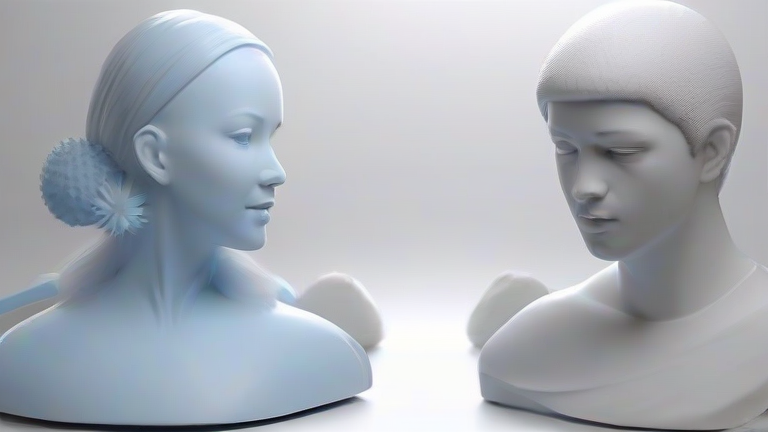
TL;DR: Modern 3D printing now handles true porcelain clay bodies (not just resin mimics), enabling sculptors to produce intricate, kiln-fired figurines with sub-0.1 mm layer resolution. The latest trend is hybrid manufacturing—printing greenware with sacrificial supports, then glaze-firing for a translucent, hand-crafted finish that disrupts traditional mold-making economics.
From Slip-Casting to Digital Clay: The Material Breakthrough
For decades, porcelain figurine production relied on slip-casting into plaster molds—a process that limits undercuts and requires expensive tooling. The latest 3D printers, however, now accept true ceramic pastes (40–50% water content, zirconia-reinforced kaolin) via screw-extrusion printheads. The key spec shift is in nozzle technology: diamond-coated 0.3 mm nozzles handle abrasive particles without wear, while heated build chambers (60–80°C) prevent cracking during layer deposition. Printers like the WASP DeltaWASP 40100 Clay and the 3D Potterbot XT-10 offer build volumes up to 40 liters, but the real game-changer is the “porcelain mode” in slicing software that automatically adjusts infill density (15–25%) to allow for 12–15% linear shrinkage during firing.
If you want to dig deeper, check out our guide on Porcelain Figurine Collecting: A Chic Lifestyle Guide.
Kiln-Ready Workflows and the “Sacrificial Lattice” Trend
Sculptors now print figurines with pre-programmed sacrificial lattices—thin ceramic struts that support overhanging arms, skirts, or flowing robes. These lattices are scored at 20% thickness, so they snap off cleanly after bisque firing (950°C). Newer printers include dual-extrusion heads: one for the porcelain body, one for a water-soluble PLA support that dissolves in an ultrasonic bath before glaze firing. This eliminates post-print sanding marks entirely. Spec-wise, look for printers with 0.05 mm Z-axis resolution and closed-loop pressure control to prevent clay clogging. The industry benchmark is now “greenware strength”—measured at 4–6 MPa—allowing figurines to be handled right off the build plate without distortion.
Industry Impact: Small-Batch Customization and Artisan Revival
The biggest disruption is economic. A traditional porcelain figurine mold costs $2,000–$15,000 and takes 6 weeks to produce. 3D printing cuts that to a few hundred dollars in material and 48 hours of machine time. This enables “edition of one” commissions—collectors can order a figurine modeled from a family photo, with the sculptor adjusting the pose digitally. Moreover, studios are adopting “digital slip” recipes: adding 5% bentonite to standard porcelain clay to improve extrusion flow without affecting fired translucency. The result is a 30% reduction in kiln failures from trapped air, since printing deposits a continuous, void-free material column. However, surface texture remains a challenge—printed layers can show faint ribbing, which skilled sculptors now intentionally exaggerate as a “digital glaze texture” aesthetic, turning a flaw into a signature style.
FAQ
Q: Can I 3D print a porcelain figurine that looks exactly like a hand-thrown piece?
A: Yes, but only with post-processing. After printing, use a soft sponge and water to smooth layer lines before firing, then apply a high-gloss glaze. The fired result is indistinguishable from slip-cast porcelain, with the added benefit of perfect internal hollow walls (2 mm thick) that reduce weight and firing time.
Q: What is the maximum practical size for a 3D-printed porcelain figurine?
A: With current desktop systems, 40 cm tall is the sweet spot. Larger pieces require segmented printing (head, torso, limbs) and wet-clay joining with a slip slurry. Industrial robots with 6-axis arms can print up to 1 meter, but they cost over $50,000 and need a dedicated kiln with programmable cooling rates.
Q: Do I need to change my glaze recipes for 3D
Leave a Reply