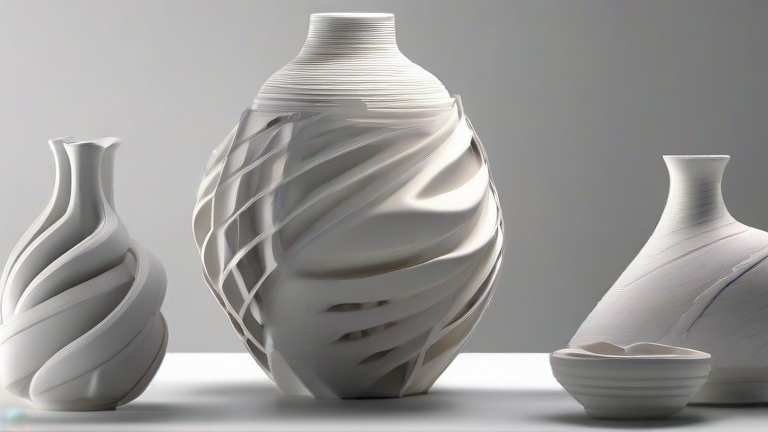
3D Printing Porcelain Sculptures: Tech Meets Art
TL;DR: Recent advancements in digital ceramic sintering allow for the precise, layer-by-layer fabrication of complex porcelain figurines that were previously impossible to throw or carve by hand. This technology merges high-precision digital design with traditional kiln firing to create durable, high-resolution art objects that challenge conventional manufacturing limits.
The intersection of additive manufacturing and traditional ceramics has reached a critical maturity point, transforming how artists and designers approach porcelain sculpture. While early 3D printing attempts with clay often resulted in brittle, low-resolution prototypes, the latest generation of ceramic printing systems has unlocked the potential for fine art porcelain. This shift is not merely about replacing the potter’s wheel; it is about expanding the geometric vocabulary available to sculptors, enabling the creation of intricate, self-supporting structures with microscopic surface details that defy manual craftsmanship.
If you want to dig deeper, check out our guide on Porcelain Figurines & Sculptures: Timeless Elegance for Your.
Latest Technological Developments
At the forefront of this revolution is the refinement of Direct Ink Write (DIW) technology specifically tuned for fine porcelain bodies. Modern printers utilize high-viscosity, water-based ceramic slurries that contain precisely sized particle distributions, typically ranging from 20 to 50 micrometers. This particle uniformity ensures that the printed object maintains structural integrity during the long drying and firing processes. The most significant recent development lies in the use of photopolymerized ceramic composites. By using UV-curable binders mixed with porcelain powder, machines like those from ExOne and SLM Solutions can achieve layer thicknesses as fine as 25 microns. This resolution allows for the printing of delicate figurine features, such as individual strands of hair or thin drapery folds, without the risk of collapse under gravity during the printing process. Furthermore, the integration of AI-driven simulation software now allows designers to predict and compensate for material shrinkage rates, which can vary between 10% and 20% depending on the specific porcelain formulation and firing schedule.
Technical Specifications and Material Science
The specification of the final product is heavily dependent on the post-processing workflow. Printed green bodies must be dried slowly to prevent cracking, a process that can take several weeks for large sculptures. Subsequently, the pieces undergo debinding in a controlled atmosphere furnace to remove organic binders before the final high-temperature firing at temperatures exceeding 1200°C. The resulting porcelain is vitrified, meaning it becomes non-porous and highly durable. The mechanical strength of these 3D-printed porcelain figurines often rivals or exceeds that of traditionally hand-thrown pieces, provided the print orientation is optimized to distribute stress evenly. Surface finish can be further enhanced through digital sanding and hand polishing, allowing artists to achieve the characteristic glossy, translucent aesthetic associated with high-quality porcelain tableware and art objects. The ability to print hollow structures with internal supports that are later removed via chemical dissolution has also opened new avenues for creating lightweight yet robust sculptural forms.
Industry Impact and Market Shifts
The industry impact of this technology is profound, particularly in the luxury goods and bespoke art sectors. Traditional porcelain manufacturers are increasingly adopting 3D printing for prototyping and small-batch production, significantly reducing lead times and material waste. This shift empowers independent artists to produce limited-edition figurines and sculptures without the need for expensive, custom molds, which historically required a minimum production run to be economically viable. The democratization of production means that digital files can be shared globally, allowing a sculptor in one country to produce identical, high-quality porcelain figures in another. Moreover, the technology facilitates the preservation of cultural heritage by enabling the exact replication of damaged or fragile historical artifacts for museum displays. As the cost of high-resolution ceramic printers continues to decrease, we anticipate a surge in hybrid workflows where digital printing handles the complex structural elements, while traditional hand-painting adds the final artistic touch, creating a new genre of tech-infused ceramic art.
FAQ
Q: Can 3D printed porcelain be used for functional items like cups or plates?
A: Yes, provided the material is food-safe and properly glazed. The vitrified nature of
Leave a Reply