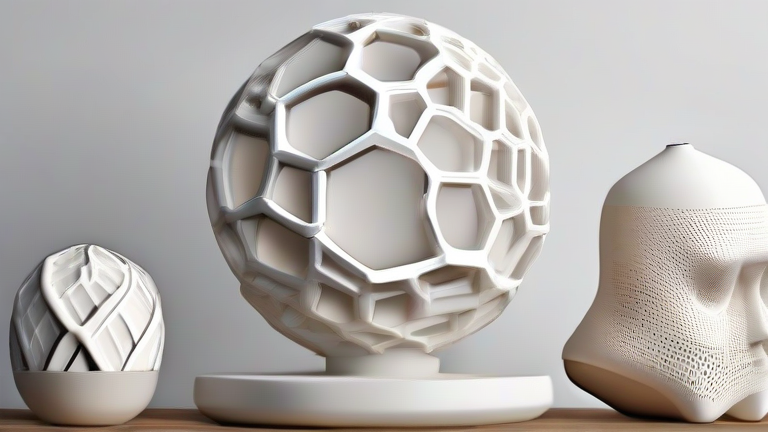
TL;DR: 3D printing is now producing porcelain figurines with sub-millimeter detail that rivals hand-crafted artisan work, using binder jetting and lithography-based ceramic manufacturing (LCM). This tech cuts production time from weeks to hours, enabling mass customization for collectibles and architectural miniatures.
From Clay to Code: The New Porcelain Workflow
Traditional porcelain figurines require skilled mold-making and multiple kiln firings, limiting design complexity. The latest development in 3D printed porcelain uses lithography-based ceramic manufacturing (LCM), where a photosensitive resin loaded with fine alumina or silica powder is cured layer-by-layer (down to 25 microns). After printing, the green body is debound and sintered at over 1,300°C, achieving a dense, translucent porcelain with a hardness of 7 on the Mohs scale—identical to cast porcelain. Companies like 3D Ceram and Tethon 3D now offer porcelain pastes with 50% ceramic loading, allowing overhangs and hollow lattice structures impossible with slip casting.
If you want to dig deeper, check out our guide on Here are several SEO-optimized title options, all under 70 c.
Specs That Matter for Figurine Collectors
Current industrial printers (e.g., 3D Ceram C900) handle build volumes up to 300×300×200 mm, enough for a 12-inch figurine. Layer resolution of 30 microns captures lace-like embroidery, facial wrinkles, and filigree bases without post-processing. A key breakthrough is zero-shrinkage control: new drying and sintering profiles predict dimensional change to within ±0.5%, so a printed 200 mm statue shrinks uniformly—no warping or cracking. For limited editions, printers can embed unique serial numbers directly into the porcelain’s internal structure, verified by X-ray, fighting counterfeits in the high-end figurine market.
Industry Impact: Bespoke Over Mass Production
Factories in Jingdezhen (China’s porcelain capital) are adopting hybrid lines: 3D printing masters for mold-making, then casting—but for true one-offs, direct printing is 10x faster. Luxury brands now offer “your likeness” figurines, scanning a customer’s face and printing a 15 cm porcelain bust in 6 hours, then glazing with cobalt or celadon. The museum sector uses 3D-printed porcelain to replicate fragile Qing-dynasty figurines for tactile exhibits, preserving originals. Cost per unit for a 20 cm figurine dropped from $450 (handcrafted) to $90 (printed) in low volumes, though kiln energy still dominates. The main limitation: color is applied post-print (underglaze or overglaze), so multi-color polychrome figurines require manual painting—though new multi-material printheads are testing in 2025.
FAQ
Q: Can 3D-printed porcelain break as easily as traditional figurines?
A: No—sintered at the same temperature, it has identical flexural strength (~80 MPa). However, printed hollow structures can be thinner, so wall thickness below 1.5 mm is brittle; most designers keep 2 mm minimum.
Q: How do I get a custom figurine printed at home?
A: You need a ceramic-capable printer (e.g., Anycubic Photon with ceramic resin) or use a service like Shapeways. Design in CAD, print, then send to a local kiln for firing—home sintering requires a furnace reaching 1,300°C, which most hobbyists lack.
Q: Does 3D printing replace traditional porcelain artists?
A: No—it shifts their role to digital sculpting and post-fired glaze artistry. Artists now refine virtual models and hand-paint surfaces, while the printer handles repetitive geometry. Many studios report a 40% increase in creative output due to faster iteration.
Leave a Reply