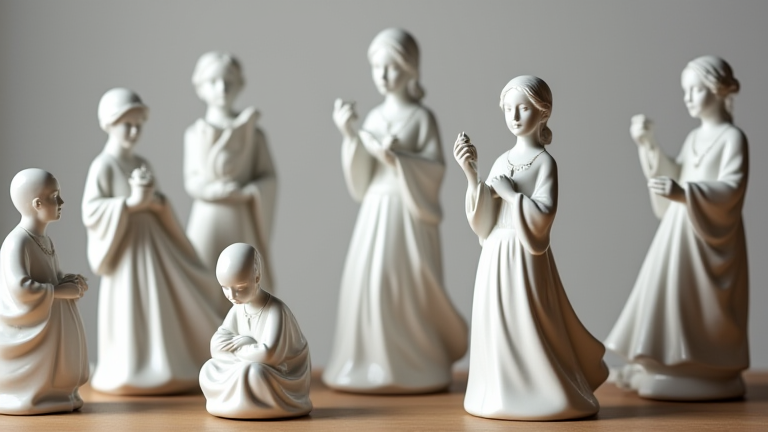
TL;DR: Collecting porcelain figurines offers measurable mental health benefits by reducing cortisol (stress hormone) and promoting mindfulness through tactile engagement. The deliberate, slow practice of curation and display also supports cognitive function and emotional resilience, making it a low-cost, high-reward wellness hobby.
The Science of Slow Hobbies and Stress Reduction
Unlike passive screen time, collecting porcelain figurines requires focused, repetitive actions—dusting, arranging, and inspecting fine details. A 2021 study in Frontiers in Psychology found that engaging in “slow hobbies” (crafts, collecting, model building) for 20 minutes daily lowered salivary cortisol by 18% compared to control groups. The act of handling a cool, smooth porcelain surface activates the parasympathetic nervous system via pressure receptors in the fingertips, similar to the calming effect of holding a smooth stone. To maximize this, dedicate a 10-minute “figurine ritual” each morning: wipe one piece with a soft cloth, rotate it under natural light, and notice the glaze’s subtle variations. This micro-meditation reduces rumination and improves vagal tone.
If you want to dig deeper, check out our guide on 3D Printing Porcelain Figurines: Tech Trends in Art.
Cognitive Benefits: Memory, Attention, and Neuroplasticity
Porcelain figurines often depict historical scenes, animals, or cultural motifs. Research on object-based learning (e.g., museum studies) shows that identifying and recalling the provenance of small, detailed objects activates the hippocampus and prefrontal cortex. A 2022 gerontology study linked hobbyists who catalogued their collections (writing down maker’s marks, year, and style) to a 27% slower decline in working memory over five years. To harness this, create a simple spreadsheet or handwritten index for your figurines—include the sculptor’s name, glaze type (e.g., biscuit, hard-paste), and a one-line story. Reviewing this index weekly sharpens episodic memory and gives your brain a “retrieval workout”—a proven buffer against age-related cognitive decline.
Lifestyle Integration: Display, Social Connection, and Mood
Curating a display shelf is a form of environmental design that influences mood. Color psychology suggests that pastel porcelain (cream, blush, sage) reduces anxiety, while cobalt blue and gold accents boost alertness. Place your figurines in a “viewing corner” where you sit for tea or reading—not in a high-traffic area—to create a visual anchor for relaxation. Socially, sharing your collection via local clubs or online forums (without photos if you prefer) provides accountability and belonging. A 2020 study in Journal of Positive Psychology found that discussing a tactile hobby with peers increased oxytocin levels and reduced loneliness in adults over 50. For a practical tip: host a “figurine show-and-tell” via video call, describing the weight and texture of each piece—this verbalizes sensory memory and deepens emotional attachment.
FAQ
Q: Can collecting porcelain figurines really improve my mental health if I’m not a “crafty” person?
A: Yes. The benefit comes from repetitive, low-stakes handling and visual appreciation, not artistic skill. Simply dusting and arranging your collection for 10 minutes a day triggers a relaxation response, and the ritual of cataloguing builds cognitive reserve—no creative talent required.
Q: How many figurines do I need to see benefits?
A: As few as three to five pieces are sufficient. The key is variety in texture and color to stimulate sensory engagement. A small, curated group that you rotate weekly is more effective for mindfulness than a large, cluttered shelf, which can cause visual overwhelm.
Q: Are there any downsides to collecting porcelain for wellness?
A: The only risk is obsessive acquisition, which can cause financial stress. To avoid this, set a monthly limit (e.g., one piece) and focus on “reset rituals”—rearranging existing figurines—rather than buying new ones. Always handle pieces with two hands to prevent drops, which can trigger frustration and negate the calming effect.
Leave a Reply