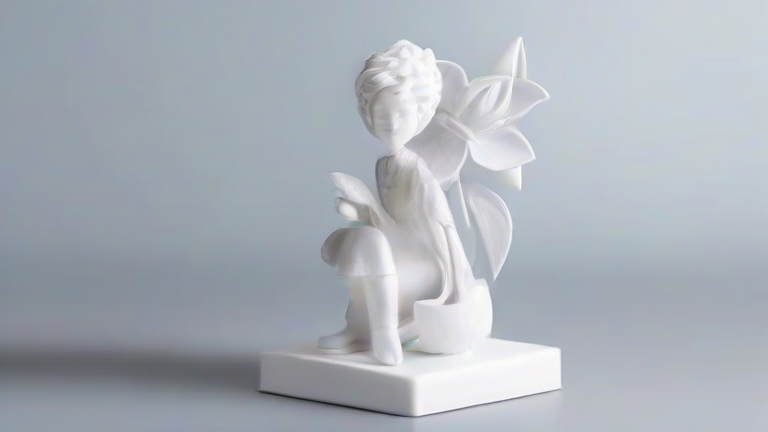
TL;DR: Advanced multi-material 3D printers now produce high-definition porcelain figurines with intricate details previously impossible to achieve via traditional slip casting. These innovations significantly reduce production waste and lead times, enabling mass customization for the art and home decor industries.
The Rise of Digital Ceramic Sculpting
The landscape of ceramic art is undergoing a profound transformation, driven by rapid advancements in additive manufacturing technologies. For decades, creating complex porcelain figurines required skilled artisans to hand-mold clay or rely on labor-intensive mold-making processes. Today, sophisticated 3D printing systems are rewriting the rules, allowing for the creation of highly detailed, lightweight, and durable porcelain sculptures with unprecedented speed and precision. This shift is not merely a novelty; it represents a fundamental change in how artists, designers, and manufacturers approach the production of fine porcelain goods.
Latest Technological Developments
Recent breakthroughs focus on material science and print resolution. New generation ceramic pastes, often referred to as “green bodies,” have been engineered to offer superior flow properties and reduced shrinkage during the firing process. This stability allows for finer nozzle extrusion, enabling printers to achieve layer heights as low as 0.05 millimeters. Such precision is critical for capturing the delicate features of figurines, such as hair strands, fabric folds, and facial expressions, which were often lost in traditional methods. Furthermore, the integration of photopolymerization techniques for ceramic resins has emerged as a powerful alternative. This method uses light to cure slurry mixtures, allowing for the creation of extremely complex geometries and hollow structures that are ideal for large-scale sculptures. These hollow designs reduce material usage by up to 40% while maintaining structural integrity after the high-temperature sintering process.
Technical Specifications and Performance
Modern industrial 3D printers for porcelain now feature multi-axis gantry systems that ensure consistency across large build volumes, often exceeding 300mm in height. The sintering phase, where the printed object is fired at temperatures ranging from 1,200°C to 1,400°C, has been optimized using AI-driven kiln controls. These systems monitor thermal gradients in real-time to prevent cracking and warping, ensuring a uniform vitrification of the porcelain body. The resulting figurines exhibit a glass-like surface finish that rivals hand-thrown ceramics, with a Mohs hardness comparable to traditional stoneware. Additionally, the ability to print with multiple materials simultaneously allows for two-tone porcelain effects, where different colored clays are deposited layer by layer to create vibrant, multi-colored sculptures without the need for post-production painting.
Industry Impact and Future Outlook
The impact on the industry is substantial. Mass customization is now economically viable, allowing brands to offer personalized figurines at scale. This capability is particularly attractive to the gaming and entertainment sectors, which seek to produce high-fidelity collectibles for fans. Supply chains are becoming more agile, with local printing facilities reducing shipping costs and carbon footprints associated with transporting fragile finished goods. Moreover, the reduction in material waste supports sustainability goals, a key driver for modern consumers. As these technologies become more accessible, we anticipate a surge in independent studios and small businesses leveraging 3D printing to bring unique artistic visions to life. The barrier to entry for high-quality porcelain production is lowering, fostering a more creative and competitive market. However, challenges remain regarding the cost of high-grade ceramic feedstock and the need for specialized post-processing equipment. Despite these hurdles, the trajectory is clear: 3D printing is becoming the standard tool for modern porcelain sculpture, blending traditional craftsmanship with digital innovation.
FAQ
Q: Can 3D printed porcelain figurines withstand high temperatures?
A: Yes, once fully sintered in a kiln, 3D printed porcelain reaches temperatures of 1,200°C to 1,400°C, resulting in a material with thermal stability and durability comparable to traditional high-fire ceramics.
If you want to dig deeper, check out our guide on Do Porcelain Figurines Affect Your Health? Air Quality Guide.
Q: What is the difference between 3D printed porcelain and standard ceramic?
A: Porcelain is a specific type of ceramic made from kaolin clay, fired at higher temperatures to
Leave a Reply