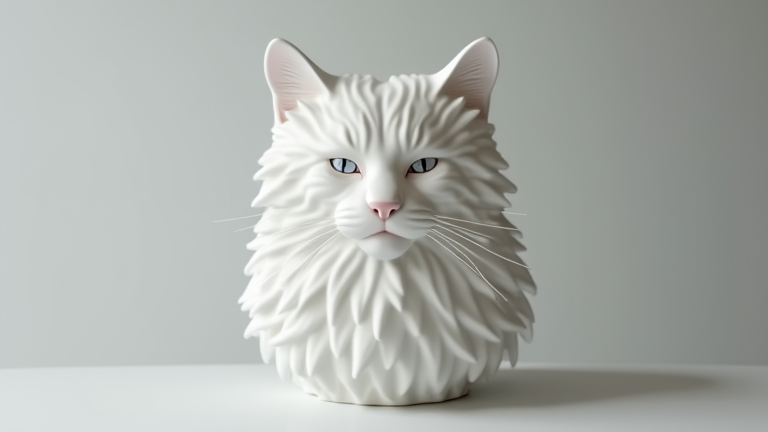
TL;DR: The convergence of high-resolution additive manufacturing and advanced ceramic materials has unlocked the ability to produce intricate, mass-customizable porcelain sculptures with unprecedented detail and structural integrity. This technology is transforming the art industry by enabling complex geometries impossible to achieve through traditional throwing or carving, thereby bridging the gap between digital design and physical craftsmanship.
Revolutionizing Ceramic Form
The intersection of technology and fine art has reached a new milestone with the maturation of 3D printing technologies specifically tailored for porcelain. Unlike standard FDM printing used for plastics, porcelain requires high-temperature sintering processes that demand precise control over material flow and thermal dynamics. The latest developments focus on improving the viscosity and particle size distribution of porcelain slurries, allowing for layer heights as thin as 50 microns. This precision enables the reproduction of delicate features, such as fine lacework on figurines or the subtle curvature of classical busts, without the loss of detail that plagues lower-resolution methods. Artists and engineers are now collaborating to create digital libraries of sculptural forms that can be instantly printed, glazed, and fired, drastically reducing the time from concept to finished piece.
If you want to dig deeper, check out our guide on Top 10 Ergonomic Office Chairs for Back Pain Relief.
Technical Specifications and Material Science
The core specification driving this innovation is the rheological stability of the ceramic paste. Modern printers utilize direct ink writing (DIW) or stereolithography (SLA) adapted for ceramic resins, followed by debinding and sintering at temperatures exceeding 1,200 degrees Celsius. Key metrics include a shrinkage rate of approximately 15% to 20%, which must be digitally compensated in the CAD files to ensure the final sculpture matches the intended dimensions. The resulting porcelain bodies exhibit high compressive strength, often exceeding 200 MPa, and low porosity when properly glazed. This makes the sculptures not only visually stunning but also durable enough for public installation or commercial retail. Recent advancements in multi-material printing also allow for the integration of different ceramic compositions within a single figurine, creating gradients in color and texture that mimic the natural variations found in hand-thrown pottery.
Industry Impact and Market Shift
The impact on the sculpture industry is profound. Traditional ceramic studios, which rely heavily on manual labor and limited production runs, are now able to scale their creative output without compromising the unique aesthetic quality of the work. This shift democratizes access to high-end porcelain art, allowing for limited edition series that maintain exclusivity while achieving broader distribution. Furthermore, the technology enables the creation of complex, interlocking sculptural installations that were previously structurally unfeasible. Museums and galleries are increasingly commissioning digital-born porcelain works, recognizing the medium’s ability to blend historical tradition with contemporary innovation. For collectors, this means access to intricate figurines and abstract sculptures that offer a level of geometric complexity and precision unattainable by hand, while retaining the tactile, organic feel of fired clay. The market is moving toward a hybrid model where digital design meets artisanal finishing, such as hand-painting or selective glazing, preserving the human touch in an automated process.
FAQ
Q: Can 3D printed porcelain sculptures be glazed like traditional pottery?
A: Yes, the sintered porcelain body is chemically similar to traditional porcelain, allowing for standard vitreous glazes to be applied and fired to achieve a glossy, durable, and colorful finish that enhances the visual depth of the sculpture.
Q: What is the maximum size for a single porcelain figurine using current technology?
A: Most industrial ceramic printers can handle build volumes up to 500mm x 500mm x 500mm, though larger sculptures are often printed in sections and joined during the assembly phase to manage thermal stress and ensure structural stability during the firing process.
Q: Does 3D printing eliminate the need for skilled ceramic artists?
A: No, it shifts the role of the artist from manual fabrication to digital design and post-processing, requiring new technical skills in CAD software and material science while preserving the need for artistic vision in composition and aesthetic refinement.
Leave a Reply