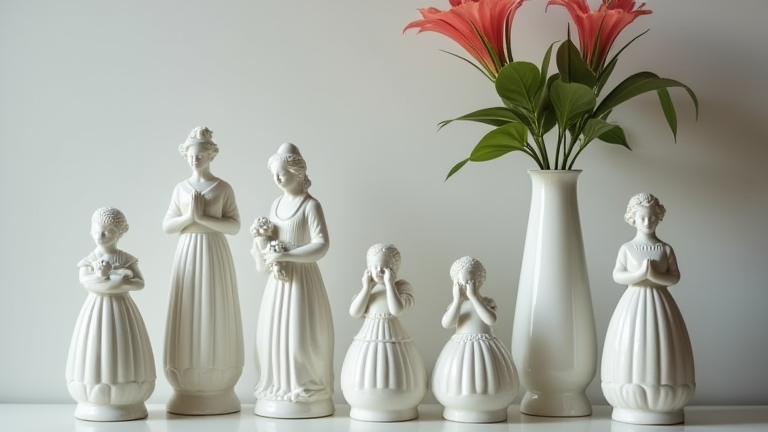
TL;DR: Porcelain figurines are more than dust-collectors; they are miniature time capsules that anchor a home in history and personal narrative. By curating these delicate sculptures, you invite a tangible connection to global artistry and slow living into your daily space.
The Art of Stillness in a Fast-Paced World
In an era of fleeting digital trends and disposable decor, porcelain figurines offer a radical act of permanence. These handcrafted sculptures—whether a Meissen harlequin, a delicate Lladró ballerina, or a rustic Staffordshire spaniel—demand attention not through size, but through presence. Their glazed surfaces catch morning light, casting soft shadows that change with the hour, turning a simple shelf into a living gallery. Unlike mass-produced resin ornaments, porcelain carries the memory of fire: each piece was shaped by human hands, kiln-baked at over 1,200 degrees, and hand-painted with pigments that have survived centuries. To place one on your mantel is to say that beauty is worth slowing down for.
If you want to dig deeper, check out our guide on Top Porcelain Figurines & Sculptures: Guide to Buying.
Cultural Travel Without a Passport
Every figurine tells a story of its origin. A blue-and-white Delft windmill whispers of Dutch canals; a Japanese Geisha with a paper parasol evokes Kyoto’s tea houses; a French shepherdess in Rococo dress recalls the pastoral fantasies of Versailles. Collecting these pieces is a form of armchair travel, allowing you to build a personal museum of world cultures. When you host dinner, a Ming-style court lady becomes a conversation starter about dynasties, while a Danish Flora Danica-inspired floral piece invites discussion of botanical illustration. This cultural layering transforms your home into a narrative tapestry—one where your travels, or your dreams of travel, are frozen in ceramic form. For the personal growth seeker, researching a piece’s provenance teaches patience and curiosity, turning a casual purchase into a lesson in art history, trade routes, and even the politics of porcelain’s invention as Europe’s answer to Chinese treasure.
Curating for Calm: A Mindful Home Practice
The very fragility of porcelain—its need for careful handling, its refusal to be rushed—is a daily meditation on mindfulness. Arranging a collection is not clutter; it is curation. Start with a single focal piece, perhaps a whimsical animal figure, and build outward by theme: music, nature, mythology, or childhood. Dedicate a shadow box or a glass-front cabinet to protect your treasures, and rotate them seasonally. This ritual of dusting each piece by hand (never with compressed air!) forces you to pause, observe the brushstrokes, and reconnect with the object’s tactile beauty. The result is a home that feels intentional, not accidental. Unlike trendy decor that fades in a year, a porcelain figurine from the 1950s or a contemporary artisan’s studio will outlive you, becoming an heirloom that carries your family’s taste and memories forward.
FAQ
Q: How do I start a porcelain figurine collection on a budget?
A: Begin with vintage or second-hand pieces from flea markets, estate sales, or online auctions—many beautiful figurines from mid-century brands like Royal Copenhagen or Hummel are affordable. Focus on one maker or theme to build cohesion, and always inspect for chips or cracks, as restorations can be costly.
Q: What is the best way to clean and maintain porcelain figurines?
A: Use a soft, dry sable brush or a microfiber cloth to gently remove dust weekly. For deeper cleaning, dip a cotton swab in lukewarm water with a drop of mild dish soap, wring it fully, and dab carefully—never soak the piece. Avoid water on unglazed or gold-trimmed areas, and keep them out of direct sunlight to prevent fading.
Q: Are porcelain figurines a good investment, or purely decorative?
A: While most figurines appreciate slowly, certain limited editions, artist-signed pieces, and rare antique marks (e.g., Meissen’s crossed swords) can
Leave a Reply