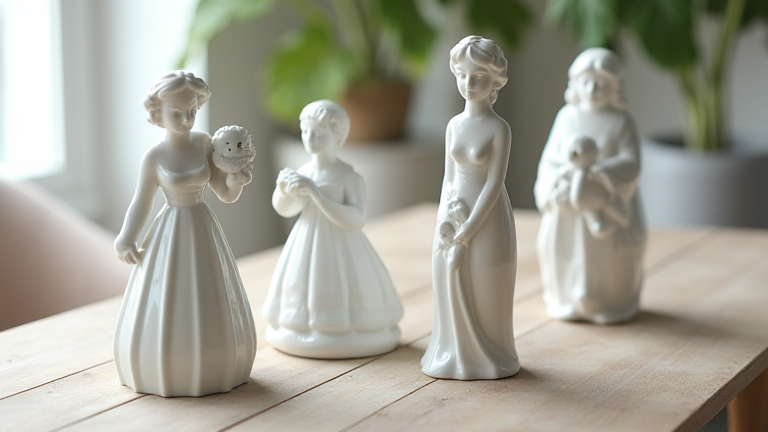
TL;DR: To elevate your home with porcelain figurines, treat them as curated art objects rather than dust-collectors—cluster them in odd numbers with contrasting heights and neutral backdrops. Rotate them seasonally to tell a personal story, just as you would refresh a travel altar or a bookshelf of cultural mementos.
Why Porcelain Figurines Deserve a Second Look
In an era of minimalist concrete and mass-produced wall art, porcelain figurines often feel like relics from a grandmother’s china cabinet. But that’s precisely their power. These delicate sculptures carry the weight of craftsmanship, history, and cultural storytelling—from the blue-and-white Delftware of the Netherlands to the intricate court ladies of Qing-dynasty China. Styling them well isn’t about nostalgia; it’s about intentional curation. Think of them as three-dimensional postcards from a journey you haven’t taken yet, or a quiet nod to a heritage you want to honor daily.
If you want to dig deeper, check out our guide on How to Sculpt Porcelain Figurines: Step-by-Step Guide.
Rule of Three: The Traveler’s Cluster
When you return from a trip, you don’t slap every souvenir on one shelf—you edit. Apply the same discipline. Choose three figurines that share a palette (ivory, celadon, or cobalt) but vary in scale. Place the tallest at the back, the smallest slightly forward, and the middle one angled at 30 degrees. This mimics a landscape: a mountain, a hill, a stone. For a cultural angle, pair a Japanese Geisha with a French shepherdess and an Italian harlequin. The visual tension tells a story of global curiosity without shouting.
Negative Space Is Your Souvenir
Resist the urge to fill every inch of a mantel or sideboard. Porcelain thrives on air. Leave at least six inches of empty shelf on either side of a figurine. If you have a glass-front cabinet, remove the doors—this turns the collection into a living diorama that changes with the light. For a personal-growth twist, use one shelf as a “growth altar”: place a figurine that represents a goal (a phoenix for resilience, a dancer for balance) and swap it out every season. The act of rearranging becomes a mindfulness ritual.
Lighting and Backdrops: The Gallery Effect
Porcelain loves diffused light. Avoid direct sunlight, which yellows the glaze. Instead, install a warm LED strip under a shelf or place a small museum-style spot on a bookshelf. A matte black or deep forest-green wall behind a white figurine makes it pop like a diamond on velvet. For a food-and-culture tie-in, set a single figurine on a stack of vintage cookbooks or beside a ceramic bowl of lemons. The contrast between hard porcelain and soft organic forms is a chef’s trick—it’s all about texture balance.
Rotate Like a Seasonal Menu
Don’t let your figurines become static. Every solstice, rotate them—move the winter robin to the bedroom, bring the spring blossom to the dining table. This mimics how cultures celebrate festivals: the Japanese display hina dolls in March, then store them away. Your home becomes a living calendar. Pair the rotation with a small handwritten note about why you chose that piece—a personal growth journal that doubles as a design log.
FAQ
Q: How do I clean porcelain figurines without damaging them?
A: Use a soft, dry sable brush (like a makeup brush) to dust weekly. For deeper cleaning, dip a cotton swab in lukewarm water with a drop of mild dish soap, wring it out completely, and gently dab—never soak or scrub. Air-dry upright, and avoid any alcohol-based cleaners.
Q: Can I mix porcelain figurines with modern decor?
A: Absolutely. Pair them with raw wood, matte black metal, or linen textures. The key is to isolate them on a clean surface—not next to cluttered trinkets. A single figur
Leave a Reply